Written by the Instant Reno Team
Bathroom Renovations in Paddington: A Practical Guide for Hiring Bathroom Remodel Contractors
If the thought of hiring bathroom remodel contractors gives you a headache — budget blowouts, council red tape and tradespeople who don't turn up on time — you're not alone. In Paddington and inner-city Sydney, many homeowners face the same pain: tight terraces, heritage overlays, and tricky asbestos or plumbing surprises that turn a simple job into a costly saga. Bathroom remodel contractors who don't plan properly can leave you out of pocket and living with a half-finished loo.
Accurate planning and cost estimation are critical because a bathroom renovation is one of the most complicated small-scale builds: plumbing, waterproofing, tiling, electrical, joinery and often structural work all collide in a compact space. Get the numbers and the methodology right up front and you avoid nasty surprises, council knock-backs and safety issues — especially in suburbs like Paddington where heritage rules and narrow terraces change the game.
This guide walks you through a practical, step-by-step approach to hiring the right team, estimating realistic costs, and navigating local rules in Paddington. Read on for detailed cost breakdowns, council links, and on-the-ground tips that will save you time and cash — no mucking around.
What makes Paddington different?
Terrace-style housing and heritage overlays: Many homes are Victorian terraces with heritage controls that limit changes to facades and sometimes to internal layouts.
Tight access: Narrow stairways and lack of street parking can add to labour time and bin/waste costs.
Older plumbing and asbestos risk: Homes built before the 1980s may have original plumbing and asbestos-containing materials.
Council approvals: Some works may need development approval or complying development certificates.
Key local resources:
City of Sydney - Development and heritage info: https://www.cityofsydney.nsw.gov.au/development
NSW Planning Portal: https://www.planningportal.nsw.gov.au/
SafeWork Australia - asbestos guidance: https://www.safeworkaustralia.gov.au/asbestos
NSW EPA - asbestos disposal and management: https://www.epa.nsw.gov.au/your-environment/asbestos
NSW Fair Trading - licensed trades and consumer advice: https://www.fairtrading.nsw.gov.au/
People renovating in Paddington often report on local forums that heritage conditions and council paperwork cause the longest delays, not the trades’ work itself. That’s worth a thought before you rip anything out.
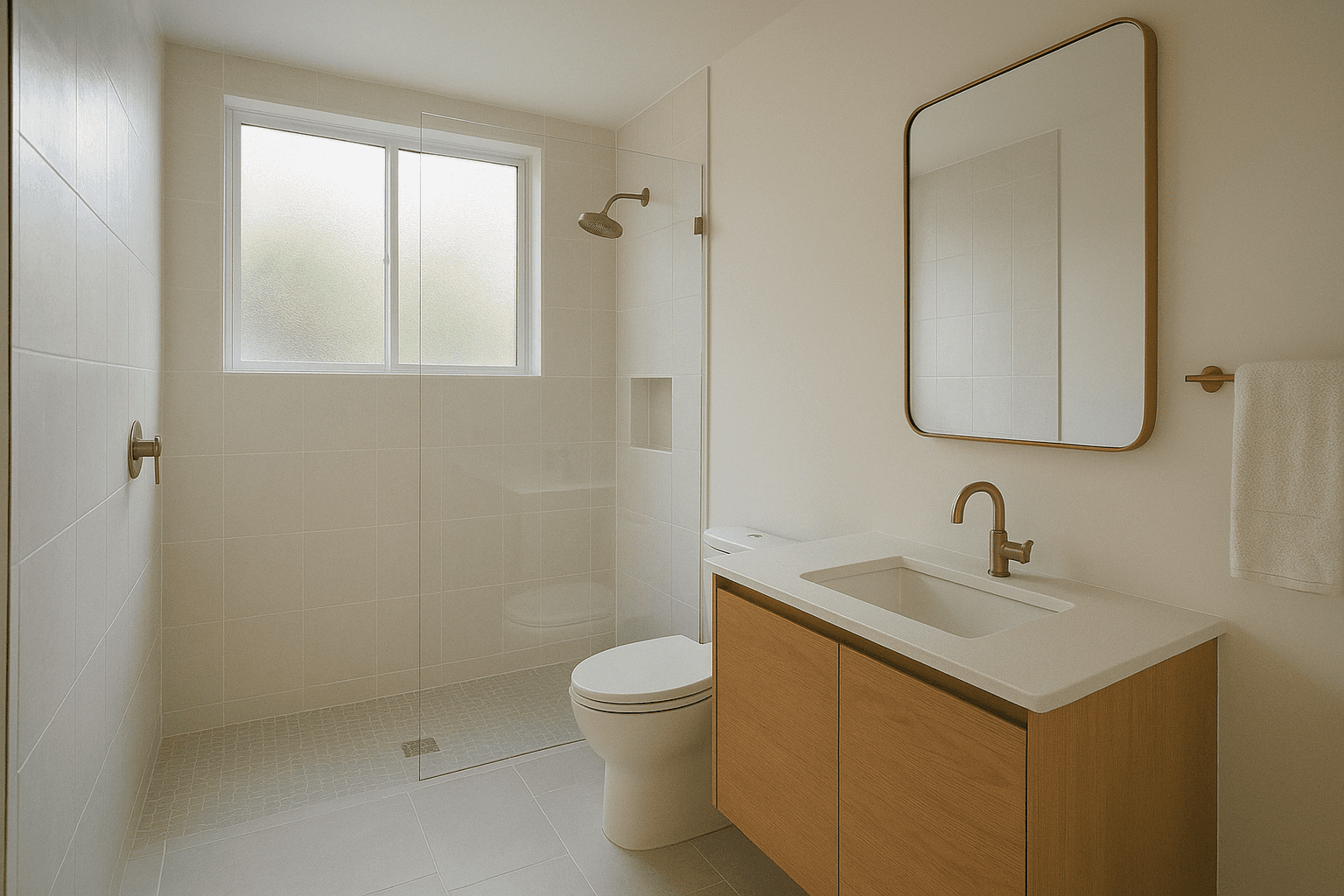
How to Plan and Tender Your Bathroom Renovation — A Step-by-Step Breakdown
Getting a good result from bathroom remodel contractors comes down to preparation, scope clarity and sensible budgeting. Here's a practical roadmap you can use.
1. Lock the brief before you call trades
Decide on scope: full gut-and-replace, cosmetic refresh, layout change (moving toilet or shower), or adding a second bathroom.
Measure and record: room dimensions, ceiling height, existing services location (hot water, waste stacks, electrical points), photos of every wall and ceiling.
Style and materials: choose tiles, tapware, shower screens, vanity style and bench top material — get ranges, not exact items, to allow flexibility in quotes.
Accessibility/access: note if the job has narrow stairs or street access limits; include bin placement and skips.
Why this matters: trades price on unknowns. The tighter your brief the fewer variations and the smoother the tender process.
2. Select who to tender to
Local bathroom remodel contractors (specialised bathroom builders) — best for full-service jobs with project management.
Licensed trades individually: plumber, electrician, tiler, waterproofing contractor, carpenter/joiner — riskier but sometimes cheaper if you manage the sequencing.
Design + construct firms: offer a fixed-price contract with design included — handy for heritage or complex jobs.
Tip: For Paddington, aim for contractors with experience in heritage terraces. They'll understand constraints and council expectations.
3. Ask for itemised quotes and program
Get at least three itemised quotes covering: demolition, plumbing, waterproofing, tiling, carpentry/joinery, painting, electrical, fixtures, and waste removal.
Request a program showing start and finish dates, trade sequence, and key milestones (waterproof test, handover).
Check licences and insurance: ensure plumbers and electricians are licensed (NSW Fair Trading) and contractors have public liability and workers’ compensation.
4. Contracts and deposits
Use a simple written contract even for small jobs: scope, price, variations process, payment schedule, warranty, completion date and retention clause (e.g., 5–10% withheld until final snagging).
Deposit: 10–20% is reasonable for most established contractors. Avoid large upfront payments.
Estimating the Costs for the bathroom remodel contractors
This section gives realistic price ranges for Paddington-style bathrooms (inner-Sydney terraces), material breakdowns and labour considerations. All figures are Australian dollars, indicative as at 2025 and will vary with finish level, access and scope.
Typical bathroom types and ballpark costs (Paddington / inner-Sydney)
Small cosmetic refresh (tiles regrout, new vanity, paint): $6,000–$12,000
Mid-range renovation (new fixtures, tiles, vanity, shower screen, minor layout retained): $18,000–$35,000
Full gut & layout change (move fixtures, new plumbing stacks, new waterproofing, custom joinery): $35,000–$75,000+
High-end designer bathroom (bespoke joinery, stone benchtop, heated floors, specialty tiles): $75,000–$120,000+
These ranges reflect inner-city labour rates, higher waste removal costs and potential heritage compliance work.
Line-item breakdown (typical mid-range job $25k example)
Demolition & rubbish removal: $1,200–$2,500
Plumbing rough-in & fixtures: $4,000–$7,500
New hot/cold lines, waste rerouting, new toilet suite, mixer taps.
Waterproofing (membrane + certification): $1,800–$4,000
Must meet AS 3740 and often requires a waterproofing certificate from a licensed applicator.
Tiling (including adhesive, grout, labour): $3,500–$7,000
Floor and wall tiles, substrate prep, floor falls.
Vanity & joinery: $2,000–$6,000
Prefab vanity vs custom joinery.
Shower screen & bath (if applicable): $800–$4,000
Electrical (lights, exhaust fan, heater): $600–$2,000
Plaster, painting, niche & finishing: $800–$2,500
Contingency & variations (10–15%): $2,500–$3,750
Council permits/inspections (if required): $300–$2,000
Material tiers and their impact on price
Budget: mass-produced tapware and 300x300 tiles — saves upfront but may wear sooner.
Mid-range: Australian-branded tapware, decent tiles, stone-look benchtops — best value for terraces.
Premium: European tapware, marble, custom joinery — big difference in cost, choose only for long-term investment.
Labour considerations specific to Paddington
Access premium: limited street loading, stairs and parking fines may add $500–$2,000 on labour and rubbish removal.
Asbestos removal: if present, licensed removal could add $1,000–$6,000 depending on extent (get testing first). See SafeWork/NSW EPA guidance: https://www.safeworkaustralia.gov.au/asbestos & https://www.epa.nsw.gov.au/your-environment/asbestos
Heritage compliance: if external works or structural changes affect heritage items, allow extra time and $1,000–$10,000+ for drawings, heritage reports and council consent.
Example quote comparison table (text)
Contractor A (design + construct): $28,500 — includes design, project management, 2-year warranty.
Contractor B (trade-by-trade): $23,000 — cheaper but you manage sequencing and variations.
Contractor C (luxury builder): $56,000 — high-end materials, custom joinery and heated floors.
When comparing, check inclusions: waterproofing type (liquid vs sheet membrane), tile grout type, tapware brand, warranty lengths and if certification (waterproofing, electrical) is included.
How to reduce cost without sacrificing quality
Keep plumbing locations the same: moving waste stacks or drains adds thousands.
Select standard tile sizes: large-format tiles often require extra labour and cutting.
Refurbish existing cabinetry where possible: replace benchtop or doors rather than full custom joinery.
Buy fixtures yourself (carefully): some contractors will accept supply-only items to reduce mark-up, but confirm warranty and returns policy.
Get waterproofing and plumbing certified: cheap shortcuts here lead to catastrophic water damage later.
Local approvals and compliance (Paddington / City of Sydney)
Heritage considerations: Internal alterations in a heritage-listed building can still be subject to consent if they affect significance. City of Sydney heritage info: https://www.cityofsydney.nsw.gov.au/development
Plumbing and drainage permits: All plumbing must be done by a licensed plumber and, in NSW, certain plumbing works may require certification. Check NSW Fair Trading: https://www.fairtrading.nsw.gov.au/
Asbestos: If your home is pre-1980s, organise an asbestos inspection. Licensed removalers are required for significant asbestos. See SafeWork Australia: https://www.safeworkaustralia.gov.au/asbestos and NSW EPA: https://www.epa.nsw.gov.au/your-environment/asbestos
If in doubt, engage a building certifier or a consultant who knows inner-Sydney heritage processes — they’ll save you time and grief.
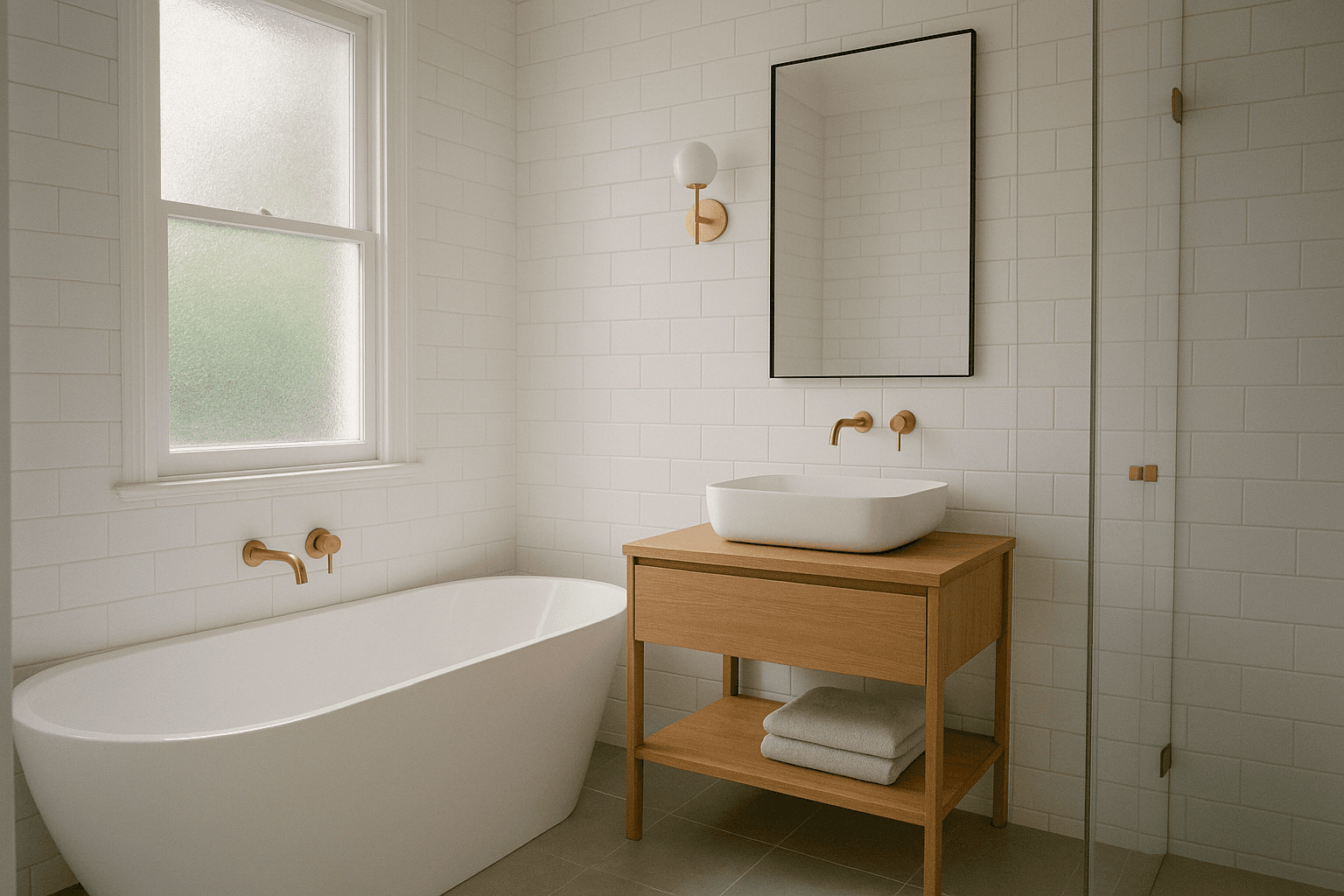
Common Mistakes Homeowners Make with Bathroom Remodel Contractors — And How to Avoid Them
Here’s what I see on the tools every week, and how to keep your project on track.
Mistake 1 — Ripping out before approvals and quotes are final
Problem: Homeowners often start demolition to speed things up, only to discover a heritage constraint or hidden structural issue that changes the scope and price.
Fix: Lock quotes and check council/heritage requirements before ripping anything out. If unsure, do an asbestos test and a quick structural check.
Mistake 2 — Letting a single contractor manage everything without checking licences
Problem: A builder might subcontract to unlicensed trades or cut corners on waterproofing to save cost.
Fix: Check licences (NSW Fair Trading), ask for waterproofing certs and warranties in writing, and insist on itemised invoices.
Mistake 3 — Choosing cheapest quote without checking scope
Problem: The cheapest quote sometimes excludes necessary work or uses inferior materials, leading to extra costs later.
Fix: Compare apples with apples. Ensure each quote has the same inclusions: tile area, waterproofing method, fixture brands, waste exclusions.
Mistake 4 — Not allowing realistic time for the program
Problem: Paddington projects get delayed by council queries, deliveries and tile backorders.
Fix: Add buffer (2–4 weeks) to your expected completion date. Plan around major events and trades’ availability.
Mistake 5 — Failing to manage changes and variations correctly
Problem: Small changes during the job balloon the bill.
Fix: Put a variations process in the contract — any extra work should be priced and signed before proceeding.
Practical tips from the toolbox (save money, avoid drama)
Do a staged approach: If budget is tight, focus on wet areas (shower & floor) and leave cosmetic items for later. Waterproofing and plumbing first — everything else can follow.
Source well: Buy non-critical items (mirrors, towel rails) yourself from retailers with good return policies.
Negotiate payment milestones: Pay on completion of agreed milestones, not calendar days. Hold a small retention until snags are fixed.
Document everything: Keep photos before, during and after, plus receipts and warranty documents — invaluable if you need to make a claim.
Snagging: Do a final walkthrough with your contractor, list minor defects and agree on a practical timeline to fix them. Don’t hand over final payment until done.
Local voices: what Paddington renovators say
On local forums and threads (e.g., r/sydney, local community pages), people renovating in Paddington repeatedly report that heritage approvals and access logistics — not the tiler — were the longest delays. Several comments emphasise that good communication from a contractor familiar with terraces makes a world of difference: a reliable tradie who understands how to protect period plasterwork and handle narrow staircases is worth the premium.
Final checklist before you sign with bathroom remodel contractors
Itemised quote from at least three suppliers
Proof of licences and insurances
Program with milestones and realistic buffers
Written contract with variations process and retention
Waterproofing and plumbing certification included
Asbestos check (if applicable)
Contingency of 10–15% in your budget
If you follow the steps in this guide, you’ll walk into your renovated bathroom without nasty surprises and with confidence that the job was done right. Paddington terraces are cracking homes with bags of character — just give the job the planning it deserves and pick bathroom remodel contractors who know the local ropes. No dramas, save your hard-earned cash, and enjoy a proper ripper new bathroom.
If you want, I can draft a simple tender checklist or an email template to request quotes from bathroom remodel contractors — tell me the size of your bathroom and your desired finish level and I’ll put it together.
AI-Powered Renovation Expert