Written by the Instant Reno Team
Complete Guide to Hiring a Contractor for Kitchen Remodel in Geelong
If you're staring at a tired bench top and wondering who to trust, finding a reliable contractor for kitchen remodel in Geelong is the first and most important step. A poor appointment, sketchy estimate or missed permit can blow your budget and timeline. Accurate planning and cost estimation stop that from happening — they make the difference between a smart renovation and a renovation nightmare.
This guide is written by a local construction manager with 20+ years on Victorian projects. We'll cover the immediate pain points homeowners face in Geelong, how to read a contractor's quote like a pro, and what local rules or site conditions will affect your final price. If you want a practical, no-nonsense route to a finished kitchen that actually increases your home's liveability and value, read on.
Why precise planning matters
Budget certainty: Without detailed scope and correct allowances for site conditions (asbestos removal, coastal corrosion, slope works), quotes are often underpriced.
Time management: Contractors who don’t plan for council permits, lead times on cabinets or stone can extend the job by months.
Risk control: Unseen conditions in older Geelong homes (e.g. asbestos fibro, hidden timber rot) create scope creep — and you pay for it.
In short: get clear scope, a reliable cost breakdown, and local knowledge — that’s what separates a competent kitchen contractor from a gamble.
What you’ll get from this guide
Step-by-step actions to prepare, tender and sign with a contractor.
How our photo analysis tool inspects your kitchen to produce a realistic estimate.
Local Geelong factors and regulations you must account for.
Common homeowner mistakes and professional ways to save money without cutting corners.
Next section drills into the practical steps.
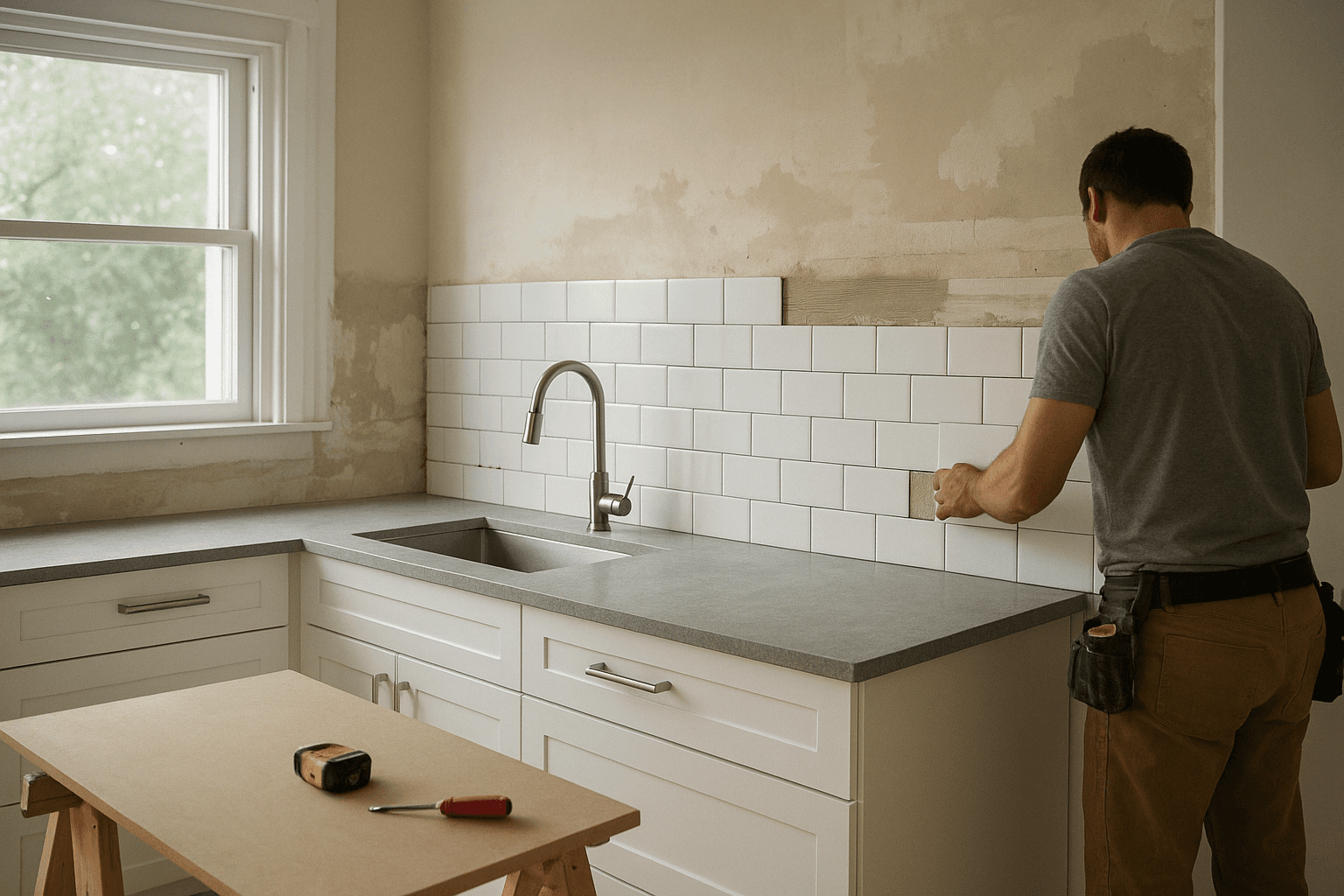
Step-by-step: How to hire, tender and manage a kitchen remodel in Geelong
H2: Prepare the project brief (before you call a contractor)
Define must-haves vs nice-to-haves. Create a short list: cabinets, bench tops, appliances, flooring, lighting, windows.
Measure the room. Rough plan with dimensions, ceiling height and locations of services (hot water, gas meter, switchboard). Even a sketch helps contractors give more accurate quotes.
Collect inspiration and finishes. Photos of styles, exact appliances and bench materials remove guesswork.
Decide on involvement level. Are you doing demolition yourself, or want a full-service contractor? This affects labour and disposal cost.
H3: Practical checklist before quotes
Floor plan sketch with measurements
Photos from multiple angles (see photo analysis section below)
A list of appliances and finish selections
Your availability window (eg. school holidays)
Approvals you already have (planning, heritage)
H2: How contractors price a kitchen remodel — understand the line items
A pragmatic, itemised quote looks like this (what to expect from a proper contractor):
Preliminaries and site set-up — site protections, temporary services, scaffolding.
Demolition & waste removal — includes asbestos removal allowance if present.
Structural works — removal or relocation of load-bearing walls, steel beams (detailed engineer design required).
Plumbing & gas — relocation of sinks, dishwasher, cooktop and new gas connections.
Electrical — new circuits for cooktop, oven, rangehood, lighting and general power points.
Cabinetry & benchtop — supply and install; include allowances for custom joinery.
Tiling & splashbacks — walls and floors.
Painting & finishes — walls, ceilings, joinery touch-ups.
Fixtures & appliances — supply and/or install.
Contingency — 10–20% for older homes; contractors should state this.
Ask contractors to show unit rates (per linear metre for cabinetry, per square metre for bench top, hourly labour rate). This helps compare quotes like-for-like.
H2: How our photo-analysis system creates a realistic estimate
We use a structured image analysis system to turn homeowner photos into a reliable starting estimate. Here's exactly how the process works so you know what the contractor is doing and why the cost is credible:
Multiple-angle intake: You submit at least 6 photos — straight-on shots of each wall, two diagonals, overhead of the cooktop, and pictures of the ceiling and service locations (meter, switchboard, plumbing under sink).
Feature detection: The tool identifies key elements in each photo:
cabinet dimensions by detecting visible cabinet edges and comparing to known standard heights (bench height 900mm, overhead cupboards 720mm etc.),
presence and location of structural elements like supporting posts or walls,
existing bench and sink positions,
flooring transitions and possible trip hazards.
Material recognition: The system recognises surface types (tiles vs floorboards vs vinyl), wall finishes, and visible corrosion or damp stains — which signals hidden issues.
Service point mapping: It flags the positions of outlets, gas lines, hot-water units and plumbing penetrations so the contractor can price relocation or new circuits.
Asbestos and hazardous-material flags: In Geelong, many pre-1980s homes contain fibro sheeting. The system looks for clues (texture, screw patterns, age indicators) and flags a site asbestos inspection if suspected.
Preliminary dimensioning: Using perspective geometry and known items (standard door widths, appliance sizes), the tool produces a rough floor-plan to within +/-10–15% accuracy — enough to produce a staged estimate or a fixed-price tender once measurements are verified on-site.
Estimate generation: The system maps the identified elements to a cost library calibrated to Geelong rates (labour rates, supplier discounts, typical removal costs). It produces:
a ‘ballpark’ estimate (early phase, based on photos),
an itemised provisional quote with allowances,
a list of items requiring onsite verification.
Human validation: A qualified estimator reviews the photo analysis and adjusts for local conditions (coastal corrosion allowance for seaside suburbs, steep site access issues in hilly pockets of Geelong). This prevents purely automated mispricing.
Why this method works for Geelong homeowners
Rapid triage: you get a realistic cost range before booking a paid site visit.
Fewer surprise costs: asbestos and structural flags reduce unknowns.
Faster tendering: contractors can pre-qualify faster and bring more accurate fixed-price offers on inspection.
H2: Getting quotes and comparing contractors — an efficient approach
Invite 3 written quotes. Compare line-by-line. If one is massively cheaper, query what’s excluded.
Ask for references and photos of finished work in Geelong. Visit a past project if practical.
Check insurance and licences: In Victoria, look for registered builders and trade licences. For building permits and mandatory warranty insurances, check the Victorian Building Authority: https://www.vba.vic.gov.au/
Payment schedule: Never pay more than 10–20% upfront for materials. Agree staged payments tied to milestones.
Fixed-price vs cost-plus: Fixed-price contracts reduce risk. Cost-plus can be used if scope is unclear, but require strict hourly rates and caps.
H2: Local Geelong specifics that change the cost
Heritage overlays and planning permits: Many older suburbs (Newtown, Geelong West, parts of East Geelong) have heritage controls. Altering external walls, windows or rooflines often needs a planning permit: City of Greater Geelong Heritage info: https://www.geelongaustralia.com.au/places/heritage/
Asbestos: Many pre-1980s Geelong houses contain asbestos fibro. Asbestos removal has strict rules in Victoria (EPA and WorkSafe): https://www.epa.vic.gov.au/your-environment/waste/asbestos and https://www.worksafe.vic.gov.au/health-and-safety-hazards/asbestos
Coastal exposure: Waterfront suburbs (Clifton Springs, Ocean Grove nearby, parts of Geelong waterfront) suffer faster corrosion to metalwork and may require stainless fixings and sacrificial coatings.
Site access & parking: Narrow streets in Geelong CBD or terraces in Newtown can add labour time and skip-bin placement costs. Council parking permits may be required for trades: check waste and street permits: https://www.geelongaustralia.com.au/residents/waste/
Building permits: Structural changes, plumbing and gas works and electrical upgrades usually require licensed trades and building permits — verify via the Victorian Building Authority: https://www.vba.vic.gov.au/
H3: Example of a staged timeline for a mid-range Geelong kitchen (8–10 week program)
Week 0–1: Finalise design, sign contract, order long-lead items (benchtop, appliances).
Week 2: Site set-up, demolition and strip-out (3–5 days).
Week 3–4: Structural and services rough-in (plumbing, gas, electrical).
Week 5: Cabinetry install and benchtop templating.
Week 6: Benchtop fabrication and installation; tiling.
Week 7: Fixtures, appliances, painting and finishing touches.
Week 8–9: Practical completion, snagging and sign-off.
Allow extra time for permit delays or supply chain hiccups — especially custom benchtops or appliances.
H2: How to use the photo-estimate report when negotiating
Use the itemised photo-estimate to ask contractors to quote to the same scope.
If a contractor refuses to match the photo-scope, they may be under- or over-scoping work.
Ask contractors to mark up the photo-plan showing proposed changes and to itemise their inclusions and exclusions clearly.
This disciplined approach saves time and weeds out unreliable quotes.
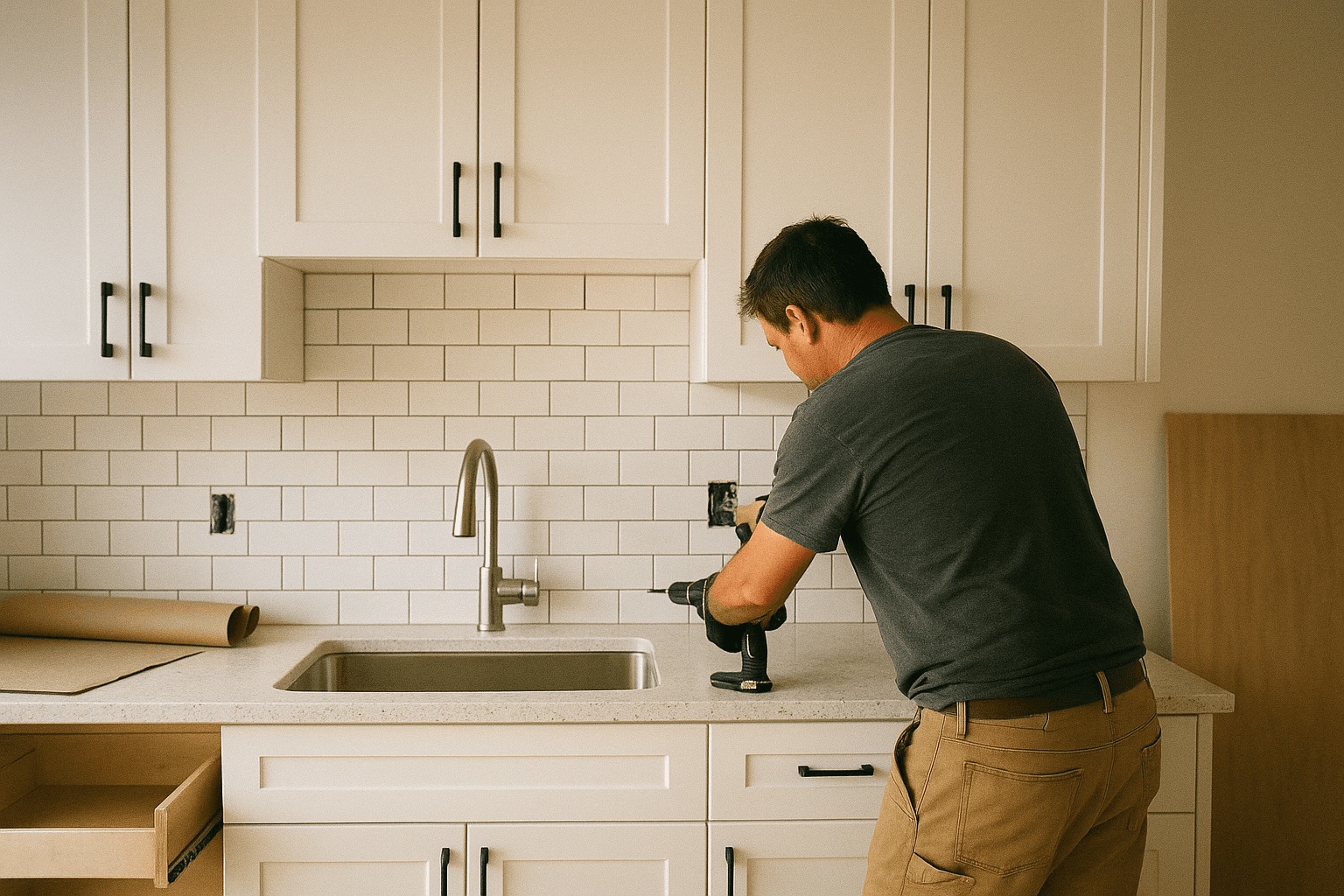
What homeowners often get wrong — and how to avoid wasting time and money
H2: Common mistakes
Choosing the cheapest quote without checking scope or credentials. The cheapest number often excludes essential items (permit costs, asbestos testing, structural works).
Skipping a site inspection. A photo estimate is a great start, but it doesn’t replace an onsite measure for a fixed price.
Underestimating hidden costs. Older Geelong homes frequently reveal rot, termite damage or asbestos on demolition.
Poor contract terms. Vague payment schedules or no defects liability period leads to disputes.
Changing finishes mid-job. This is the fastest way to blow a budget and slow the job down.
H2: How to save money without cutting corners
Retain the existing layout where possible. Moving services (plumbing, gas, drainage) is expensive.
Keep appliances and hardware where they are. Reusing existing appliances or plumbing positions reduces labour and material costs.
Choose standard cabinetry sizes. Custom joinery costs add up — modular, off-the-shelf cabinets can look excellent at a fraction of the price.
Choose durable materials appropriate to Geelong’s climate. For coastal homes, select stainless fixings and UV-resistant finishes — cheaper maintenance over time.
Get multiple fixed-price quotes tied to a clear scope. Do not allow open-ended cost-plus arrangements without a cap.
Use the photo-estimate to preselect contractors. Only invite those who respond well to the report and provide clear, line-item quotes.
H2: Contract and dispute tips — what to require
Written contract with scope attachment. Attach plans, fixtures list, finishes and the photo-estimate.
Insurance and licences: Contractor’s public liability and, if a registered builder, domestic building insurance where applicable.
Payment schedule tied to milestones. Eg. 10% deposit, 30% after strip-out, 40% on cabinetry install, 20% on completion.
Defect liability period. Minimum 3–6 months for trades; 12 months for major works.
Retention clause: Hold back 5–10% until final sign-off to ensure defects are rectified.
H2: Red flags in contractors
Cash-only, no invoice or insurance details.
No ABN or trade licence proof.
Vague start/finish dates or refusal to sign a written contract.
Pressure to accept a quote on the spot.
If you encounter these, walk away — there are plenty of reputable trades in Geelong.
H3: Local resources and regulations (useful links)
City of Greater Geelong — heritage and planning: https://www.geelongaustralia.com.au/places/heritage/
City of Greater Geelong — waste and skip bins: https://www.geelongaustralia.com.au/residents/waste/
Victorian Building Authority — building permits and consumer advice: https://www.vba.vic.gov.au/
EPA Victoria — asbestos information and disposal rules: https://www.epa.vic.gov.au/your-environment/waste/asbestos
WorkSafe Victoria — asbestos safety guidance: https://www.worksafe.vic.gov.au/health-and-safety-hazards/asbestos
H2: Local voice — what Geelong owners say
People in Geelong forums and local social groups commonly report these themes:
"Having a contractor who knew local regs and asbestos rules saved us a fortune in unexpected costs."
"A detailed photo-based estimate helped shortlist trades quickly — we avoided four weeks of phone calls."
This reflects a practical local truth: contractors who understand Geelong’s older housing stock and council processes reduce surprises.
Final checklist before you sign
Confirm whether a planning permit or building permit is required for your scope.
Verify contractor licences and insurances.
Ask for a signed, itemised fixed-price quote with a defects period.
Keep contingency funds (10–20%) for unknowns — more if your house is older than 1970.
Book a final defect inspection and get a sign-off checklist.
If you follow the steps above, use the photo-estimate as your starting negotiating tool, and respect local council and asbestos rules, your Geelong kitchen remodel will have the best chance of finishing on time, on budget and without drama. Need a second opinion on a photo-estimate or want a checklist template to give to contractors? I can prepare a printable scope checklist tailored to your Geelong suburb and house age.
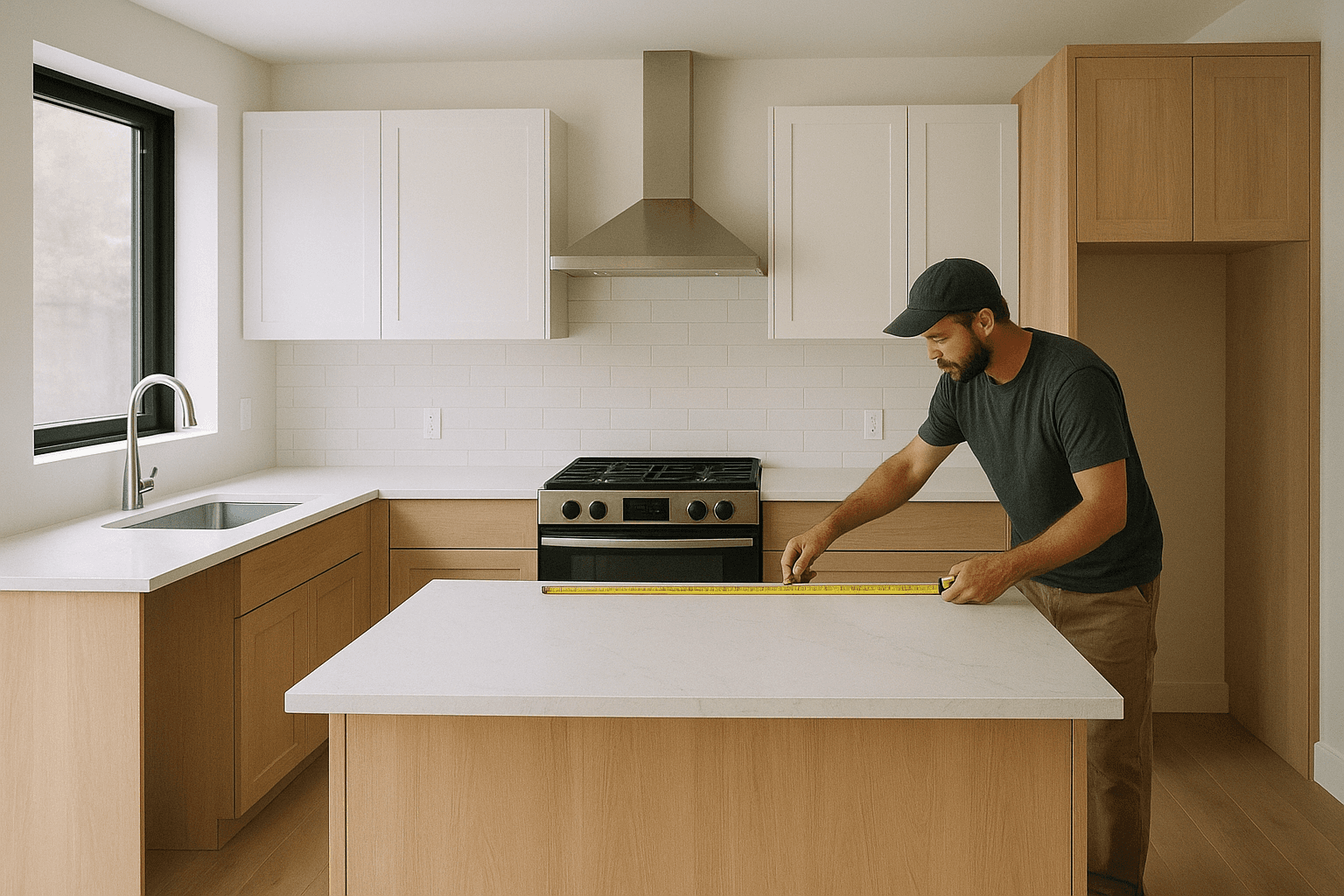
AI-Powered Renovation Expert