Written by the Instant Reno Team
How to Hire a Bath Remodeling Contractor in Australia — Costs, Steps & Expert Tips
Renovating a bathroom can quickly become the biggest headache in a reno — leaking pipes, unexpected structural fixes, and blowout costs. If you’re calling a bath remodeling contractor, you want to avoid surprises and get a solid, practical result that lasts. Accurate planning and realistic cost estimation are critical: they stop delays, protect your budget, and keep your renovation on the straight and narrow.
In this guide I’ll walk you through everything a homeowner in Australia needs to know when engaging a bath remodeling contractor — from step-by-step planning and sourcing trades, to a deep-dive cost breakdown and the common traps people fall into. I’m a construction manager with 20+ years on Aussie sites, and I’ll be frank: good outcomes come from asking the right questions up-front, knowing the local rules, and building a contingency buffer.
What you’ll get out of this:
A clear process to brief and hire a contractor.
Realistic price ranges and line-item costs you can use to compare quotes.
What to watch for on-site and during design decisions so you don’t throw money away.
Let’s get stuck into it — no fluff, just practical, Aussie-tested advice.
Quick reality check
Most homeowners underestimate bathroom reno timelines by at least 30% and budgets by 20–40%.
Hidden issues (rotten floor framing, old plumbing, asbestos cladding or wall linings in older homes) are the usual budget-busters.
The cheapest quote is rarely the best. You want a contractor who can manage the job, co-ordinate trades, and guarantee the result.
In the next section we’ll break down the process step-by-step and show how to estimate costs properly.
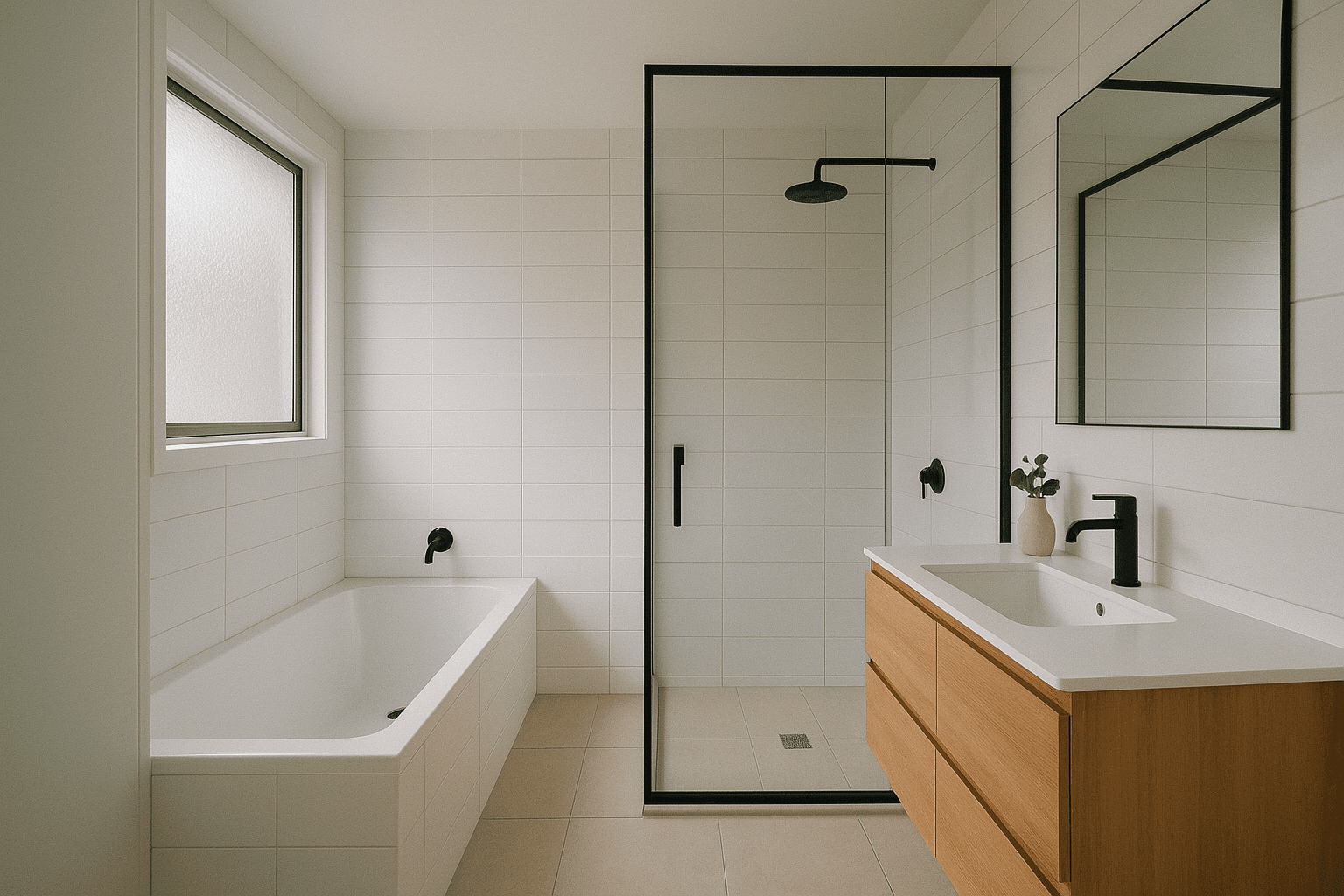
Getting started: Practical steps to plan your bathroom reno
1. Define scope before you shop
Decide your priorities: Is it functional (replace shower, fix leak) or cosmetic (new tiles, freestanding bath, vanity)?
Fixed or moved plumbing: Moving the toilet, shower or vanity increases time and cost significantly.
Finish level: Basic, mid-range or premium. This determines tiling, fixtures, and cabinetry choices.
Access & timing: If this is your only bathroom, plan for temporary arrangements and expect increased costs for fast-tracked work.
2. Sketch, measure and gather inspiration
Draw a simple floor plan with dimensions.
Take photos of walls, ceiling voids, floor under the old tiles (if you can) and record existing plumbing positions.
Create a shortlist of fixtures and finishes — brand and model where possible — to get accurate pricing.
3. Choose the right contractor
Look for builders/renovators or specialist bathroom fitters with insurance, ABN and references.
Check portfolios for similar-sized jobs.
Ask for at least three written quotes with the same scope and materials.
Ensure your contractor provides a written contract with milestones and payment schedule.
4. Approvals and regulations
Most internal bathroom renos don’t need council approval unless structural changes or wet-area relocations are involved.
Heritage-listed properties and strata units may have restrictions. Check council and strata rules before you commit.
Asbestos: if your home was built pre-1990 (or earlier in some states), walls and under-floor linings might contain asbestos. Get a licensed asbestos assessor if you suspect it.
Useful sources:
SafeWork Australia — asbestos guidance: https://www.safeworkaustralia.gov.au/asbestos
NSW Fair Trading — renovating & builders: https://www.fairtrading.nsw.gov.au
Estimating the Costs for the bath remodeling contractor
Below is a realistic cost guide for bathroom renovations across Australia. Prices vary by city (Sydney, Melbourne, Brisbane, Perth, Adelaide), the age of the property, and how much plumbing or structural work is required. These ranges are based on typical projects seen across my 20+ years working on Australian sites.
Quick cost bands (2025 estimate)
Minor refresh (cosmetic only): $4,000 – $12,000
Replace fittings, benchtop, paint, regrout tiles, minor floor repairs.
Standard bathroom reno (same layout, quality fixtures): $12,000 – $30,000
New shower/bath, vanity, tiles, waterproofing, plumbing work, minor carpentry.
Full remodel (layout change, higher finishes): $30,000 – $60,000+
Move sanitaryware, replace subfloor, structural or framing work, premium fixtures.
High-end or designer bathroom: $60,000 – $100,000+
Freestanding baths, designer fixtures, underfloor heating, premium tiling, custom joinery.
These are national ranges — metropolitan areas and inner-city suburbs often sit at the upper end. Regional or outer-suburban jobs can sit at the lower-to-mid ranges, but travel for trades can add costs.
Line-item cost breakdown (typical mid-range job ~ $20,000)
Demolition & disposal: $800 – $2,500
Includes removal of old fixtures, tiles, and disposal. Asbestos removal is extra and licensed.
Plumbing (rough-in & fixture installation): $2,000 – $6,000
Costs jump if you move drain lines or install new floor wastes. Hot water or pressure upgrades add more.
Electrical & lighting: $500 – $2,000
GPOs, downlights, extraction fan. Heated towel rails or underfloor heating add significant cost.
Waterproofing: $1,200 – $4,000
Must be to Australian standard (AS 3740) and done by experienced trades. A bad waterproof job is a future nightmare.
Tiling (supply & install): $3,000 – $8,000
Large format tiles can cost more due to labour and substrate prep.
Joinery & vanity: $1,000 – $5,000
Prefab vanities on the cheap end; custom joinery costs more.
Fixtures (shower, toilet, basin mixers): $1,500 – $6,000
Branded fixtures cost more but reduce the risk of early failure.
Labour / builder margin: $3,000 – $8,000
Depends on project complexity and trades coordination. Good builders manage subbies and scheduling.
Contingency (recommended): 10–20% of contract
Always include a buffer for unseen issues.
Special costs to watch
Asbestos removal: $1,500 – $6,000 depending on extent — only licensed removalists.
Structural repairs (floor joists, framing): from $2,000 upwards.
Council fees / approvals: varies. Typically minor unless structural or heritage.
Strata approvals: Some body corporates require formal approval and conditions — delays can cost.
How to validate quotes
Ask for itemised quotes: demolition, plumbing, electrical, waterproofing, tiling, fixtures, labour.
Check exclusions: removal of old fixtures? Who supplies tiles and fixtures? Who pays for replacement of rotted framing?
Compare apples with apples: same tile size/quality, same brand fixtures, and the same scope for plumbing moves.
Ask the contractor for references for similar-sized jobs and view a recent finished project in person.
Payment structure and contract essentials
Typical payment schedule: deposit (5–20%), progress payments at milestones, final payment on practical completion.
Never pay the full amount up-front.
Ensure contract includes: project scope, timelines, payment schedule, warranty, insurance details, and a contingency process for variations.
Licensed trades should carry public liability and professional indemnity (builders) — request copies.
Timeline expectations
Cosmetic refresh: 3–7 days
Standard renovation (same layout): 2–3 weeks
Full remodel with layout change: 4–8+ weeks
Delays are common due to tile lead times, custom joinery, or discovery of hidden issues. Plan living arrangements accordingly.
Sourcing materials and trades without ripping off your budget
Buy long-lead or high-cost items yourself (e.g., tiles, vanity, shower screen) if you’re comfortable — contractors often mark-up supplies.
Use national chains for standard fixtures (Bunnings, Reece, Beaumont Tiles) to compare prices.
For specialist tiles or designer fittings, allow for 6–12 week lead times.
Get a builder’s breakdown of labour vs materials so you can decide where to save.
Local supply tips (Australia)
City suburbs: plenty of showroom access and competition — shop around.
Regional towns: limited suppliers; factor freight and lead time into the budget.
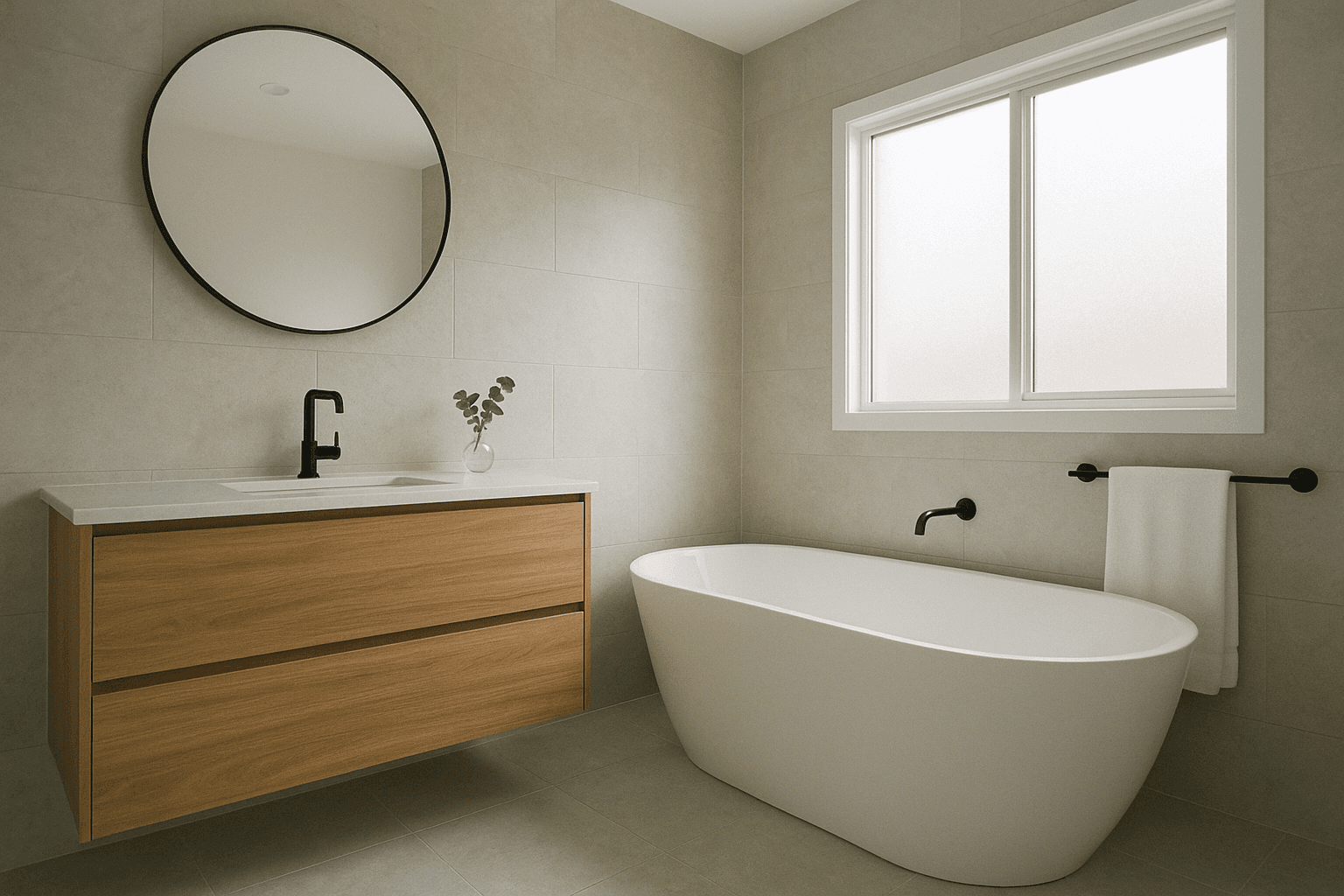
Common mistakes, pitfalls and pro tips from builders who know
Typical homeowner mistakes
Underestimating scope creep: Homeowners add changes mid-job (different tile, extra feature) without adjusting schedule or budget.
Choosing solely on price: The lowest quote may cut corners on waterproofing, subfloor prep, or warranty.
Skipping waterproofing checks: Waterproofing to AS 3740 is non-negotiable. Skimping here can lead to leaks and mould.
Not checking for asbestos: Older homes often hide asbestos behind tiles or in wall sheeting. A surprise removal can blow budgets.
No contingency: Not setting aside 10–20% for the unexpected is a common rookie error.
How to save money without cutting corners
Keep the layout: Retaining existing plumbing positions saves big on demolition and rework.
Mix high/low finishes: Spend on long-life items (tapware, shower screen) and save on grout, paint, or accessories.
Buy fixtures on sale: Time purchases to sales or shop clearance ranges for identical quality.
Negotiate fixed-price milestones: Agree on fixed prices for well-defined stages to limit variations.
Do non-technical work yourself: Paint, remove lightweight cabinetry, or source accessories to reduce labour costs.
Red flags in a contractor or quote
No ABN or licence details provided.
Vague or lump-sum quotes with no breakdown.
Asks for large up-front payment (more than standard deposit range).
Unwillingness to provide references or show past work.
No written contract or warranty.
On-site tips to make the job smoother
Provide clear access and a secure place for trades to store materials.
Keep communication regular — weekly check-ins are practical.
If you need the bathroom during works, set clear expectations about windows/days of access.
Warranty and aftercare
Ask about workmanship warranty (commonly 12 months for trades, though many reputable builders offer longer for structural items).
Fixtures carry manufacturer warranties — keep receipts and manuals.
Arrange a final defects check and holdback on final payment until minor items are fixed.
Local voices (what homeowners are saying)
On Australian renovation forums and threads, people commonly report that managing the builder and ensuring clear scope saved them from costly mid-job changes.
Homeowners warn that rushed decisions on tiles or showers (made without measuring or considering heights) are frequent causes of extra cost.
Final checklist before you sign
Written, itemised quote from at least three contractors.
Confirm contractor insurance, licence and ABN.
Confirm who orders and owns the materials and who is responsible for defects.
Include a minimum 10% contingency in your budget and plan for up to 20% if the home is older or has unknowns.
Agree payment schedule and hold a retention (small final payment) until practical completion and defects rectified.
If you follow this process — be realistic about budget and timelines, get itemised quotes, and put protections in your contract — you’ll avoid the common horror stories and get a bathroom that’s built to last. Good planning saves time and money, and getting a reputable bath remodeling contractor on the job makes all the difference.
If you want, I can help you prepare a checklist to give to contractors or a template for an itemised scope of works to use when collecting quotes — tell me the size of your bathroom and whether you’re keeping the layout and I’ll draft it up.
AI-Powered Renovation Expert