Written by the Instant Reno Team
How to Pick the Right Contractor for Kitchen Remodel in Australia: Costs, Quotes & Common Traps
Starting a kitchen renovation can feel like stepping into a minefield — quotes that wildly vary, trades that vanish, and decisions that blow out the budget. If you’re looking for a contractor for kitchen remodel, you need accurate planning and cost estimation from day one. Getting the budget, scope and trades sorted up front saves thousands and keeps the project on the rails.
This guide is written for Australian homeowners who want a realistic, no-nonsense pathway through kitchen renovation: from setting a realistic renovation budget and reading quotes, to choosing a kitchen contractor, understanding building permits, and avoiding the common traps that wreck timelines. We'll use Aussie terms, practical checklists and links to official guidance so you can make informed decisions.
Keywords used throughout: contractor for kitchen remodel, kitchen renovation, kitchen contractor, kitchen remodel cost, kitchen fit-out, kitchen designer, kitchen cabinetry, benchtop, building permits, renovation budget, kitchen trades, joiner, cabinetmaker, plumbing, electrical, council approval.
Why accurate planning and cost estimation matter
Protect your budget: Under-quoting is the most common cause of disputes. A clear scope prevents scope creep and surprise costs.
Manage time: Realistic schedules account for lead times on benchtops, cabinetry and appliances — not just the tradies’ wall-clock days.
Avoid compliance headaches: Knowing when you need council approval or a licensed plumber/electrician prevents costly rework.
Get these three right and you’ll save time, money and a truckload of grief.
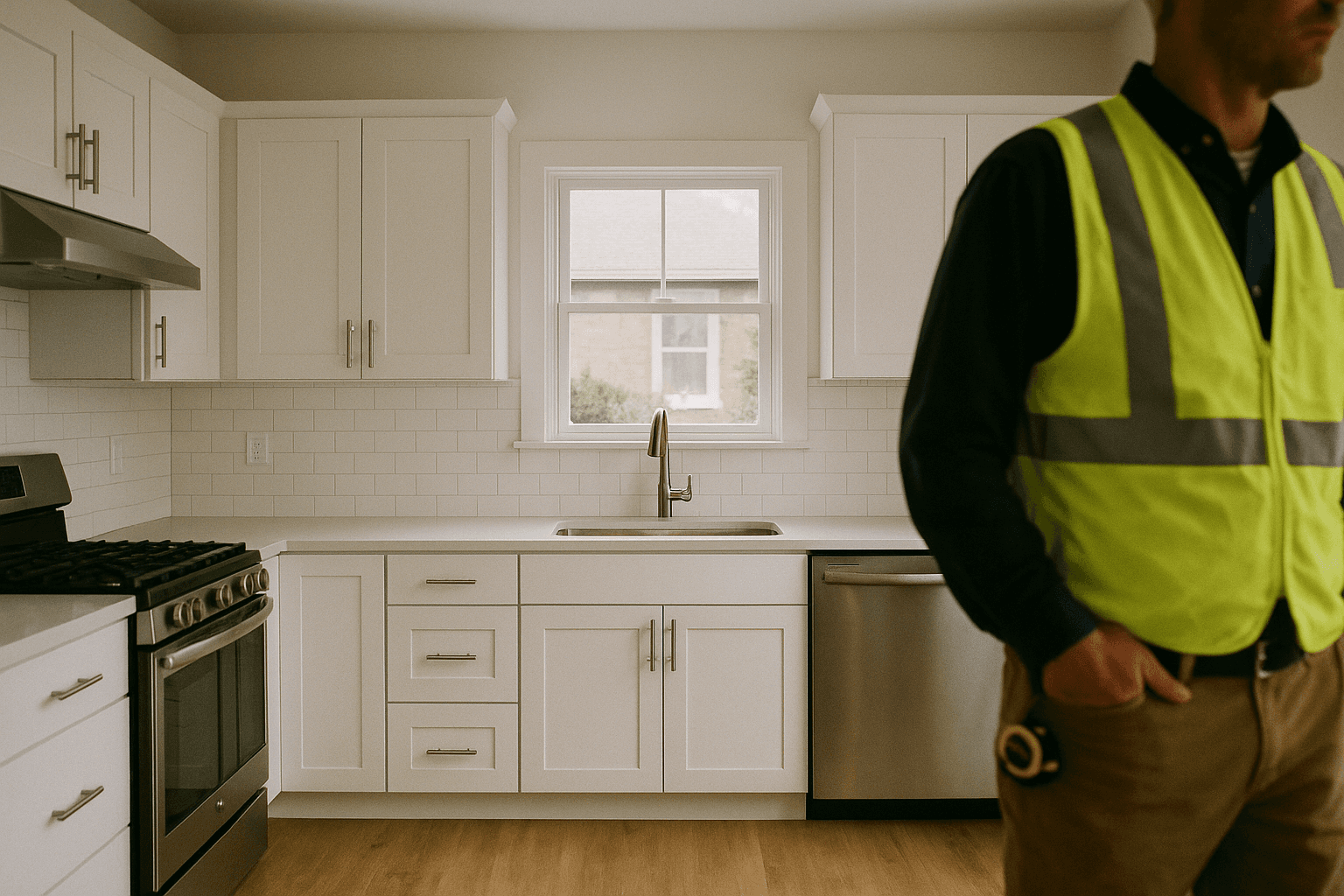
Step-by-step: How to manage a kitchen remodel like a pro
H2: 1. Define scope and set a realistic renovation budget
Decide the level of refurbishment:
Cosmetic refresh (paint, hardware, splashback) — low cost.
Partial remodel (new cabinetry, benchtop, appliances) — medium cost.
Full gut and reconfigure (structural, layout changes, wiring/plumbing relocation) — high cost.
Average Australian price bands (2025 rough guide):
Cosmetic: $5,000–$15,000
Mid-range remodel: $20,000–$45,000
Full gut + layout change: $45,000–$120,000+
Build contingency: Add 10–20% contingency for unknowns (asbestos, rotted joists, hidden plumbing).
Prioritise: Decide must-haves vs nice-to-haves. Spend on the things you touch daily: benchtop, cabinetry, appliances.
H2: 2. Choose the right delivery model
Design & construct contractor: Single point of responsibility — contractor manages designer, trades and council approvals. Good for homeowners who want a hands-off experience.
Project manager + sub-trades: Flexible and often cheaper, but requires active homeowner involvement or hiring a dedicated project manager.
Trade-by-trade hiring: You source cabinetmaker, plumber, electrician separately. Best for small jobs or experienced renovators.
Keywords: kitchen contractor, kitchen designer, project manager, cabinetmaker, joiner, kitchen trades.
H2: 3. Prepare a concise scope of works and documentation
Include in your scope:
Full list of trades and their responsibilities (cabinetmaker, plumber, electrician, tiler, painter, joiner).
Product specifications (benchtop material, cabinet board type, splashback finish, appliances make/model).
Allowances and provisional sums with clear triggers for variations.
Completion criteria and defects period.
Drawings: Elevation drawings for cabinetry, floor plan with appliance placements, electrical plan for switches, GPOs and lighting.
Written contract: Use a written contract even for small jobs. Essential items: payment schedule, timeframes, warranty, dispute resolution.
Useful sources: NSW Fair Trading (https://www.fairtrading.nsw.gov.au), Australian Building Codes Board (https://www.abcb.gov.au).
H2: 4. Request accurate quotes and compare apples with apples
Request 3 quotes minimum from reputable kitchen contractors and cabinetmakers. Look for:
Detailed breakdown: labour, materials, provisional sums, appliances, permit costs.
Lead times for long-lead items: stone benchtops, custom cabinetry, splashbacks, ovens.
Payment schedule tied to milestones (not large upfront deposits).
Spot risky quotes:
Extremely low bids with vague scope — likely to add variations later.
Quotes without documentation or drawings.
Keywords to watch in quotes: provisional sum, variation, client-supplied, supply-only, cut-outs, templating.
H2: 5. Check licences, insurance and references
Licensing: Verify your contractor and trades are licensed for their trade in your state (e.g., NSW Fair Trading, Victorian Building Authority). For structural changes, a licensed builder is essential.
Insurance: Contractor public liability and home warranty insurance where applicable (varies by state and project value).
References and photos: Ask for recent projects, contactable referees and site photos that show finish standard.
Online review checks: Google reviews, Facebook, and local forums like Whirlpool or Reddit Australia provide real-world feedback — homeowners often share details about craftsmanship and reliability.
H2: 6. Plan for council approval and compliance
When council approval is likely required:
Structural changes (removing load-bearing walls, altering supports).
Changes that affect parking, drainage or neighbour amenity.
In some heritage areas, even cosmetic changes may need approval.
Consult your local council website early. Quick links:
NSW Fair Trading: https://www.fairtrading.nsw.gov.au
Australian Building Codes Board (BCA): https://www.abcb.gov.au
SafeWork Australia (asbestos guidance): https://www.safeworkaustralia.gov.au
Energy and plumbing compliance: Make sure new appliances, gas installations and hot-water systems are installed by licensed trades and comply with Australian Standards.
H2: 7. Scheduling, lead times and staging the work
Typical sequence:
Demolition and stripout
Structural and frame work (if any)
Plumbing and electrical rough-in
Flooring adjustments
Cabinetry manufacture and fit-out (templating for benchtop)
Benchtop supply and install
Splashback, appliances, painting, finishing
Lead times to factor in:
Stone benchtops and templating: 2–6 weeks
Custom cabinetry: 3–8 weeks depending on workload
Appliances: variable; order early to avoid delays
H2: 8. Quality control and final inspections
Snag list: Do a thorough walk with the contractor before final payment. Document defects and set clear rectification timeframe.
Final certifications: Collect compliance certificates for plumbing and electrical work, any building approvals and warranties for appliances.
Retention: Hold back a small retention (5–10%) until the snag list is completed.
Keywords used across steps: kitchen remodel cost, kitchen fit-out, benchtop, kitchen cabinetry, kitchen appliances, plumbing, electrical, council approval, renovation budget.
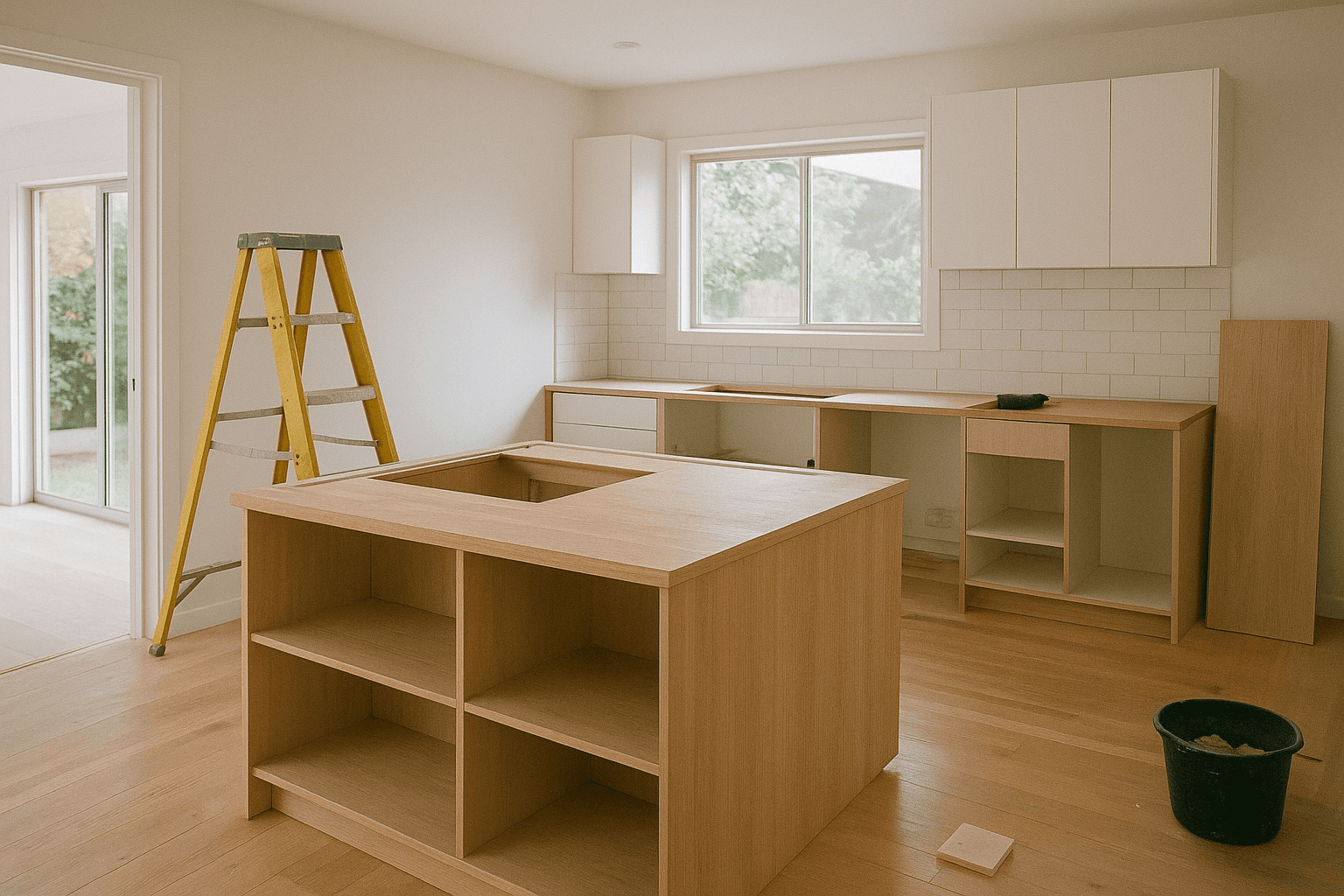
Common mistakes Australians make — and how to avoid them
H2: Mistake 1 — Picking on price alone
Problem: A rock-bottom quote often hides omissions that become variations and blowouts.
Fix: Compare detailed scopes, not just the bottom line. Verify licences, insurance and ask for previous job photos. Prefer quotes with a clear schedule and milestone payments.
H2: Mistake 2 — Skipping professional drawings and specifications
Problem: Lack of drawings leads to misunderstandings about dimensions, finishes and appliance fit.
Fix: Invest in at least basic cabinetry elevations and appliance layout. Templates and templating for benchtops avoid awkward gaps and rework.
H2: Mistake 3 — Not allowing for contingencies
Problem: Old houses often come with surprises — asbestos, termite damage, non-compliant wiring.
Fix: Set aside 10–20% contingency. For pre-1960s houses, budget for asbestos removal and linked costs.
H2: Mistake 4 — Poor scheduling and underestimating lead times
Problem: Homeowners assume tradies can turn up immediately. Long waits for stone, custom doors or appliances stall the job.
Fix: Confirm lead times in writing. Order long-lead items early and stage demolition only when materials are on order.
H2: Mistake 5 — Improper permits and certs
Problem: Failing to obtain the right permits can mean fines, forced removals, or insurance refusal.
Fix: Check with your local council before starting and insist on compliance certificates from plumbers and electricians.
H2: Saving money without cutting corners
Reuse where sensible: If the existing layout is fine, keep services in place to avoid plumbing and electrical relocation costs.
Mix finishes: Use a mid-range benchtop with a premium splashback or tapware — visual impact without huge cost.
Supply some materials yourself: If you have savvy supplier contacts, supplying tiles or picket hardware yourself can save margin — but don’t supply critical items like certified electrical gear.
Stagger upgrades: If funds are tight, prioritise cabinetry and benchtop now and do appliances or splashback later.
H2: What to look out for in contracts and quotes
Unclear provisional sums: Ensure provisional sums have a defined scope and an explicit variation mechanism.
Vague timelines: Contract should include both start and finish dates and allowances for delays caused by supplier lead times.
Payment triggers: Avoid large upfront payments. Typical schedule: deposit for goods, progress payment at installation, balance on practical completion after snagging.
H2: Expert tips from 20+ years on Aussie builds
Engage early with a cabinetmaker: A good cabinetmaker will flag site issues that a builder may miss, especially in older, out-of-plumb houses.
Floor level matters: If you’re replacing floors, get this done before cabinetry. Uneven floors are a killer for fit and finish.
Templates for benchtops: Never allow a benchtop to be ordered without a physical template — templating reduces errors and waste.
Communicate weekly: Weekly progress emails and short site meetings keep everyone accountable and minimise surprises.
Get written warranties: For cabinetry, benchtops, and workmanship. Most reputable contractors offer a minimum 12-month warranty; some provide longer on cabinet construction.
H2: Local notes — older homes, asbestos and heritage suburbs
Many Australian suburbs with houses from the 1950s and earlier may contain asbestos cement sheeting and old electrical systems. If your home is in such an area, test before you start and budget for licensed removal. SafeWork Australia has guidance: https://www.safeworkaustralia.gov.au/asbestos
Heritage-listed areas (e.g., many inner-city suburbs across Sydney, Melbourne and Hobart) sometimes require council approval for external changes and certain internal works. Check your local council planning page early to avoid stop-work orders.
H2: Quick checklist before you sign
Contractor licence and ABN verified.
Written contract with detailed scope and drawings.
Payment schedule tied to milestones and a small retention.
Lead times and delivery dates in writing.
Insurance certificates provided (public liability, home warranty where required).
Compliance and certification obligations noted.
Snagging and defects rectification process defined.
H2: A word on reviews and social proof
People on Whirlpool and Reddit Australia often praise projects where the builder communicated clearly and provided photos at key stages; complaints commonly centre around poor communication and surprise variations. These forums are good for anecdotal insights, but always verify claims through references and site visits.
H2: Final thoughts — realistic expectations win
A successful kitchen renovation in Australia comes down to clear scope, the right contractor, realistic budgeting and active, regular communication. If you follow the steps above — define your scope, get detailed quotes, verify licences and insurance, allow for lead times and contingencies, and keep a tight snagging process — you’ll greatly reduce risk and cost surprises.
If you want, I can help you prepare a clear scope of works template, a list of questions to ask potential contractors, or a sample contract payment schedule tailored to your state. Hit me up and let’s get your reno sorted without the dramas.

AI-Powered Renovation Expert