Written by the Instant Reno Team
The complete Australian guide to hiring kitchen remodel contractors and nailing costs
Renovations can bloody well stress you out. If your kitchen is outdated, leaking, or just doesn’t work for how your family cooks and lives, you’ll be hunting for kitchen remodel contractors — and fast. Getting planning and cost estimation right up front is the difference between a smooth reno and months of blowouts, council headaches, and regrets.
This guide is written from 20+ years on-site experience as a construction manager working across suburbs from coastal Queensland to inner-Melbourne terraces. I’ll walk you through practical, no-nonsense steps: how to scope the job, how to estimate realistic costs, what trade sequencing looks like, and where homeowners typically stuff things up. Expect clear price ranges, material breakdowns, labour logic, council checks, and local issues you must know about.
Why accurate planning and cost estimation matter
Avoid budget blowouts: A rough guesstimate leads to change orders and headaches. You need figures you can trust.
Prevent program delays: Trades booked in the wrong order stall the whole project.
Respect council and safety requirements: Unauthorised work or improper waste handling can cost fines.
Protect your home’s value: Smart choices preserve resale value; cheap shortcuts often don’t.
In the next sections I’ll break this down into step-by-step actions, a dedicated cost-estimating chapter, and a final section with the common pitfalls and savvy ways to save without cutting corners.
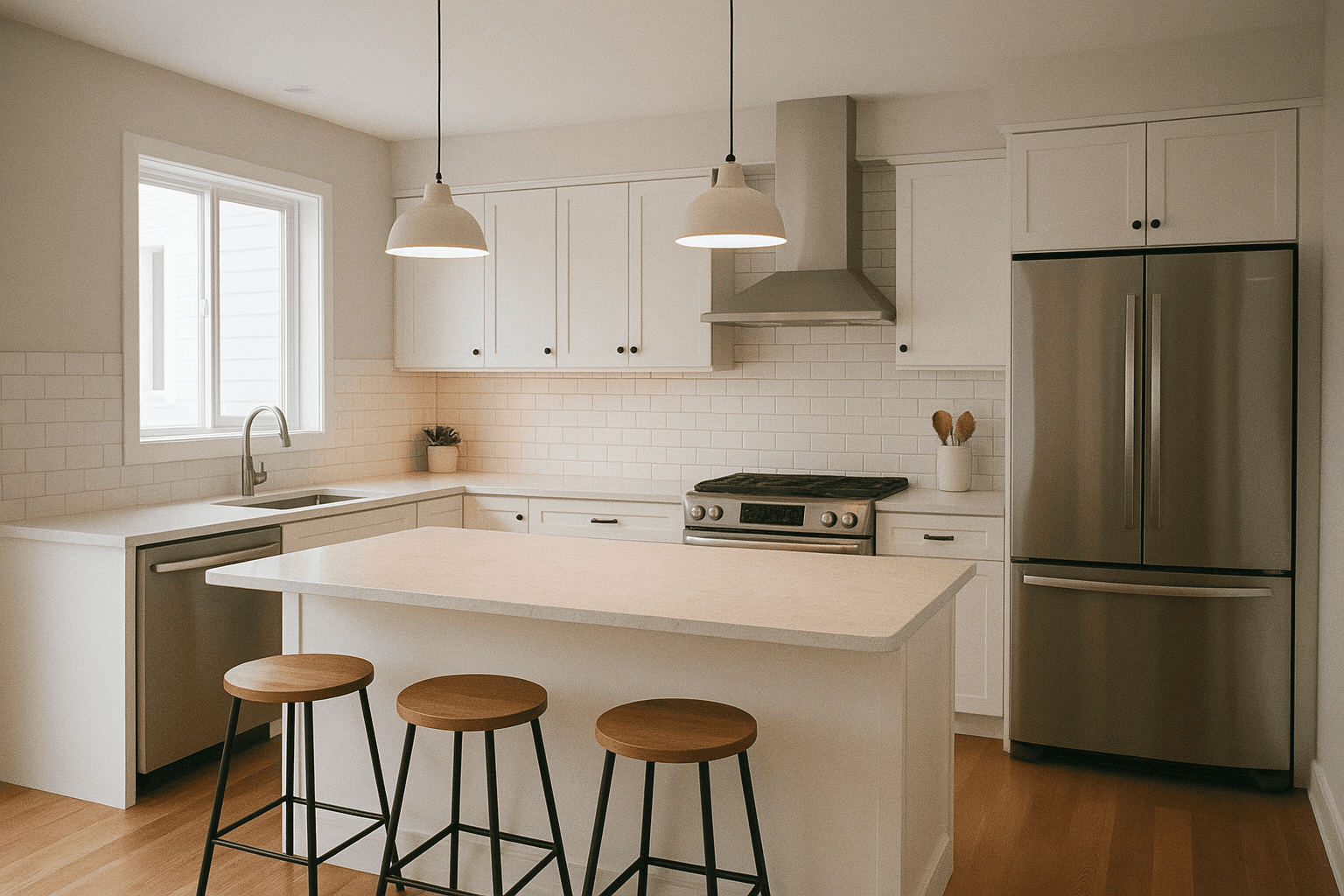
Step-by-step plan to manage your kitchen renovation
A structured approach keeps the reno on time and on budget. Use this as your project blueprint.
1. Define the brief — be specific
Function first: List what must work (storage, appliances, island, pantry, cooktop location).
Style & finishes: Pick a finish level: budget, mid-range, premium. Find 3 photos that match what you want.
Non-negotiables: Structural changes, new windows/doors, relocation of plumbing or gas.
Timeframe: When do you want the kitchen finished? Is it an urgent reno or a staged upgrade?
Tip: The clearer your brief, the more accurate quotes from kitchen remodel contractors will be.
2. Get accurate site information
Measure properly: Wall-to-wall dimensions, ceiling height, window/door positions, existing services (electrical, gas, plumbing).
Check for hazards: Older Australian houses (pre-1990s) often have asbestos in walls, floor tiles, or backing — get a test if suspected. Reference: SafeWork Australia on asbestos: https://www.safeworkaustralia.gov.au/asbestos
Access & waste: Note driveway access, on-street parking, and waste removal constraints (some councils require booked kerbside pickups).
3. Engage the right people, in the right order
Design/Dimension stage: Hire a kitchen designer or experienced contractor early. For structural changes, involve a structural engineer.
Quote stage: Ask for itemised quotes from at least three kitchen remodel contractors and separate tradie quotes for electrical, plumbing, tiling and bench fabrication if not included.
Permit stage: If your work requires building approval (structural changes, relocation of services, changes to footpaths or alfresco), lodge with your local council. Check your local council website for specifics (example: NSW Fair Trading for contractor licensing: https://www.fairtrading.nsw.gov.au/)
Build stage: Trades generally follow this order: demolition -> rough electrical/plumbing -> structural (if any) -> cabinetry install -> benchtop templating -> tiling -> appliances & connections -> painting & snagging.
4. Contracts, deposits and payment schedules
Use a written contract that lists scope, price, inclusions/exclusions, program, and payment schedule.
Reasonable deposit: 10–20% deposit is standard for small-to-medium renos. Avoid larger upfront sums.
Retention & final payment: Hold back a small retention (5–10%) until final snagging and compliance certificates are issued.
5. Communication & onsite management
Weekly check-ins: Ask your lead contractor for weekly updates and a running schedule of trades.
Photograph progress: Keep photos for warranty issues or disputes.
Be decisive: Late changes are costly — make finish decisions before trades start.
Estimating the Costs for the kitchen remodel contractors
Below is a realistic breakdown Australians can use to estimate costs. Prices vary by city, finish level, and scope. These are ballparks current to typical market rates and will give you a solid starting point when requesting quotes.
Overall budget bands (Australia-wide guide)
Small refresh (no relocation, new cabinets & benchtops): $12,000 – $25,000
Mid-range full remodel (layout change, new cabinetry, appliances, tiling): $30,000 – $70,000
High-end renovation (structural changes, premium appliances, custom joinery): $80,000 – $200,000+
Factors that push costs up:
Relocating plumbing or gas points
Structural openings to combine spaces
Specialty finishes or imported stone benchtops
Heritage listed properties with stricter restoration rules
Itemised cost breakdown
These line items help you compare contractor quotes properly.
Demolition & waste removal: $1,000 – $4,000
Includes protective measures, skip bin hire, asbestos removal (if found, asbestos abatement is priced separately and can be $2,000–$10,000 depending on scope). SafeWork guidance: https://www.safeworkaustralia.gov.au/asbestos
Carpentry & cabinetry: $6,000 – $40,000+
Off-the-shelf flat-pack or semi-custom cabinetry: $6,000–$15,000
Fully custom joinery: $18,000–$40,000+ depending on size and materials
Benchtops: $1,500 – $12,000
Laminates: $1,500–$3,500
Engineered stone (e.g., Caesarstone) or porcelain: $3,500–$8,000
Natural stone (granite, marble): $5,000–$12,000+
Appliances: $2,000 – $25,000
Budget oven, cooktop, rangehood, dishwasher: $2,000–$5,000
Mid-range branded appliances: $6,000–$12,000
Premium/feature appliances (built-in fridges, integrated systems): $15,000+
Plumbing & gas: $800 – $6,000
New sink, taps: $800–$2,000
Relocating lines or installing new gas points: $1,500–$6,000
Electrical: $800 – $6,000
New circuits, oven/cooktop supply, LED lighting, power points. Additional costs for rewiring older homes. Ensure an electrician is licensed (refer to your state’s electrical safety regulator). Example: Energy Safe Victoria: https://www.esv.vic.gov.au/
Tiling & splashbacks: $1,000 – $8,000
Splashbacks only: $200–$1,200
Floor tiling or extensive tiling: $1,200–$8,000 depending on tile choice and area
Flooring (if required): $2,000 – $12,000
Engineered timber, tiles, vinyl — costs depend on area and finish.
Painting & finishes: $800 – $4,000
Contingency: Always budget 10–20% of the total for unforeseen issues (hidden rot, asbestos, services conflict).
Labour considerations
Hourly vs fixed-price: Trades often quote fixed prices for defined scope — prefer fixed where possible to avoid disputes.
Trade rates: Electricians/plumbers will vary by city — expect $80–$150/hr for licensed trades in metro areas. Labour contributes significantly to mid-to-high-range budgets.
Lead contractor vs separate trades: A general contractor manages and wilts the headache but adds management cost (10–20%). Managing separate trades yourself can save money if you have construction experience and time.
Example cost scenarios (realistic builds)
Small suburban refresh (3m run, new cabinets, laminate benchtop, splashback, repaint):
Cabinets: $8,000
Benchtop: $1,800
Splashback & tiling: $600
Appliances (basic): $2,200
Labour & trades: $3,000
Total: $15,600 (+10% contingency)
Mid-range layout change (open to dining, island bench, engineered stone, mid-range appliances):
Demolition & structural patch: $4,500
Custom cabinets: $28,000
Engineered stone benchtops: $6,500
Appliances: $9,000
Electrical & plumbing: $6,000
Tiling & flooring: $7,500
Labour, site management: $10,000
Total: $71,500 (+10–15% contingency)
High-end heritage renovation (period façade, structural lintels, custom restore cabinetry, marble benchtops):
Heritage consent & consultant fees: $5,000+
Structural & engineering: $10,000
Custom joinery & restoration: $60,000
Natural stone benchtops: $15,000
Premium appliances & integrated solutions: $25,000
Trades & specialist restorers: $30,000
Total: $145,000+ (+15–20% contingency)
How to get accurate quotes from kitchen remodel contractors
Provide a clear brief and measured drawings. The more detail, the more accurate the quote.
Ask for itemised quotes with materials, labour hours, inclusions/exclusions, and lead times.
Check warranties and who provides them (cabinetry, benchtops, appliances, workmanship).
Verify licences and insurance: Builders must be licensed where required; trades must carry public liability and worker’s compensation. State resources: NSW Fair Trading: https://www.fairtrading.nsw.gov.au/, Victorian Building Authority: https://www.vba.vic.gov.au/
Local issues to watch for (by typical suburb type)
Old inner-city terraces (Melbourne, Sydney): Expect asbestos, narrow access for skips, heritage overlays requiring council approval. Check local heritage controls at your council website.
Beachfront properties (Gold Coast, Northern Beaches): Corrosion from salt air means selecting stainless or marine-grade fixtures, and possibly higher maintenance joinery.
Hilly suburbs (Perth hills, inner-east Melbourne slopes): Access and delivery can be trickier; check for retaining walls and drainage considerations.
Sources and further reading
SafeWork Australia — asbestos handling: https://www.safeworkaustralia.gov.au/asbestos
NSW Fair Trading — home building: https://www.fairtrading.nsw.gov.au/
Australian Building Codes Board: https://www.abcb.gov.au/
Energy Safe Victoria — electrical safety: https://www.esv.vic.gov.au/
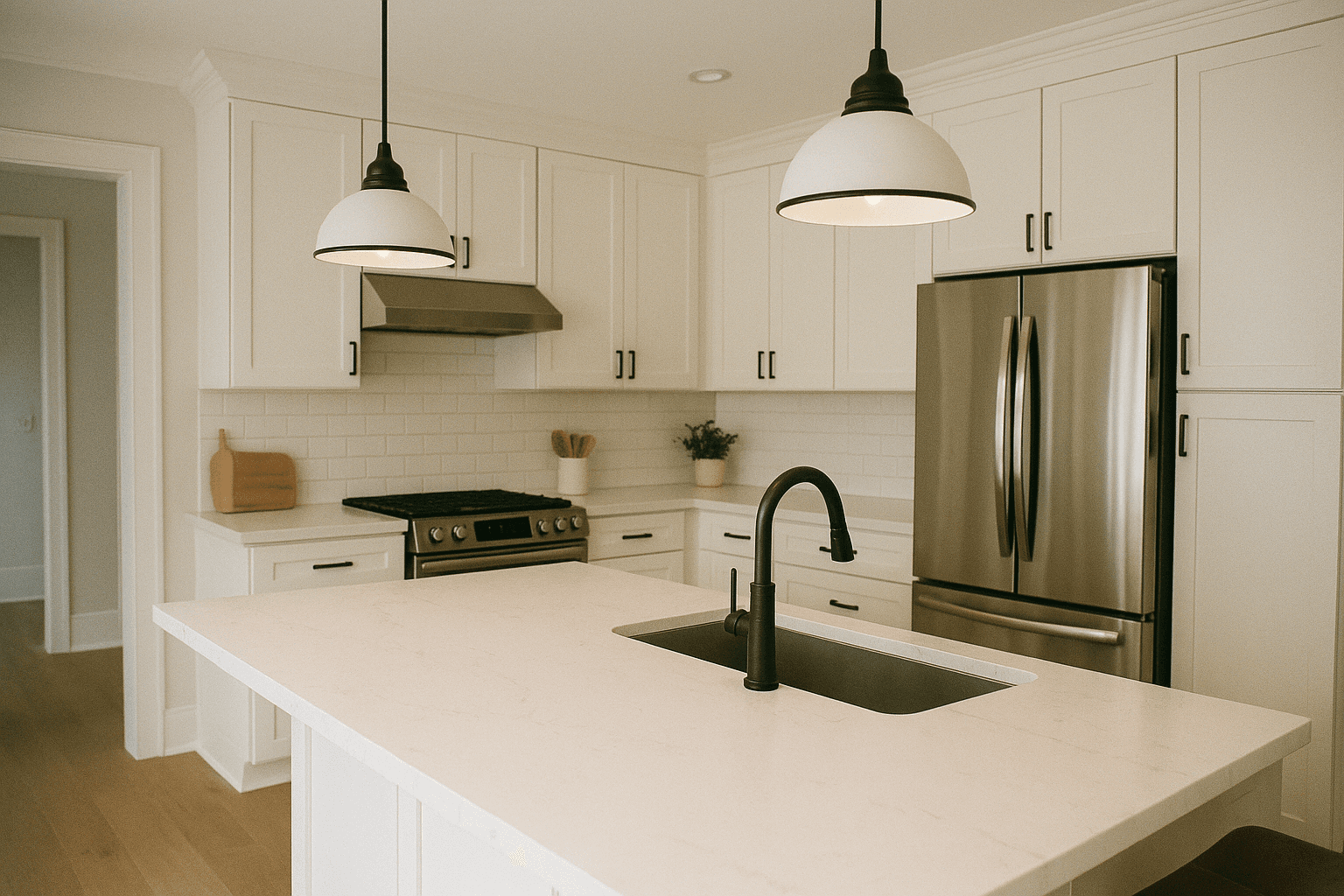
Common mistakes homeowners make — and how to avoid them
Many renovation nightmares are avoidable. Here’s what I see most often on-site and exactly how to dodge the bullet.
Mistake 1: Vague brief = inflated quotes and change orders
Problem: Homeowners ask for a ‘new kitchen’ but haven’t decided finishes, appliances, or layout. Contractors leave big buffers or throw in provisional sums.
Fix: Lock in a detailed brief and finish schedule before trades start. Get drawings and a full allowance list—names, models or exact finish samples.
Mistake 2: Skipping test pits and surveys
Problem: Hidden rot, termite damage, old wiring or asbestos are discovered after demolition, doubling costs.
Fix: For older homes, commission an asbestos test and a moisture/termite inspection. Budget a 10–20% contingency to absorb surprises.
Mistake 3: Choosing cheapest quote without checking scope
Problem: Low quotes often exclude items or use inferior materials; you end up paying more for fixes.
Fix: Compare itemised quotes line-by-line. Ask what’s not included. Check for product warranties and contractor references.
Mistake 4: Poor sequencing of trades
Problem: Cabinetry arrives before rough-ins are complete, or tiling before benchtop templating — causing rework.
Fix: Get your contractor to provide a clear program and sequencing. Only start the next trade once the previous sign-off is completed.
Mistake 5: Not checking council and heritage rules
Problem: Unauthorised changes can attract enforcement notices or require removal.
Fix: Check your local council website early. If you live in a heritage area, expect longer approval times and specialist requirements. Your contractor should help with documentation. Example: check your local council’s planning section for heritage overlays.
How to save money without cutting corners
Keep the layout: Moving plumbing or appliance locations is expensive. If possible, work with the existing services.
Mix finishes: Use premium materials where they matter (benchtop, appliances) and budget finishes for visible but less critical areas (cabinet interiors, shelving).
Buy appliances on sale: Watch major retail cycles and negotiate supply-only prices.
Reuse where appropriate: Solid timber doors can be sanded and repainted; good-quality sinks and taps can be reused if they meet your needs.
Manage the project yourself (if capable): Acting as project manager saves on GC markup, but only do this if you understand trade coordination and compliance.
Warranty, snagging and handover
Handover checklist: Ensure the contractor provides manuals, warranty documentation, a list of completed works, and compliance certificates for electrical/plumbing.
Snagging period: Most contractors offer a defects liability period (often 3–12 months). Create a snag list within the first week to catch anything obvious.
Final payment: Hold the final payment until all practical completion items are done and you have received required certificates.
Local voices — what people in your area are saying
People in inner-Melbourne renovation threads often report asbestos surprises and long waits for heritage approvals — quoting that early testing and council checks saved them delays and fines.
Homeowners on Sydney suburban forums frequently emphasise checking trades’ licensing and getting written guarantees, particularly around gas work and electrical upgrades.
(These are general sentiments collected from public renovation forums and local subreddit discussions; they reflect common local experiences rather than a single individual.)
Final checklist before you sign with kitchen remodel contractors
Detailed brief and drawings: tick
Three itemised quotes: tick
Proof of licences and insurances: tick
Program with trade sequencing & lead times: tick
Written contract with payment schedule: tick
Contingency budget (10–20%): tick
Asbestos/test and council checks (if applicable): tick
If you follow the steps above, you'll reduce the chance of surprises and get a kitchen that works hard and looks great — without losing your shirt. If you want, send through your brief and measurements and I’ll point out obvious cost drivers and potential compliance flags you should check before committing to a contractor.
AI-Powered Renovation Expert