Written by the Instant Reno Team
The Complete Guide to Hiring a Contractor for Kitchen Remodel in Bondi
If you’re staring at a lopsided benchtop, dodgy cabinetry or a kitchen layout that makes you swear every time you cook, you need a good contractor for kitchen remodel — not just a sparky or a handy bloke. In inner-Sydney suburbs like Bondi, accurate planning and a realistic cost estimate are the difference between a smooth kitchen renovation and a wallet-draining nightmare.
Why accurate planning and cost estimation matter:
Controls budget creep — kitchens are notorious for hidden costs (old wiring, asbestos, structural mods).
Reduces downtime — a proper scope and timeline minimises your time without a functioning kitchen.
Avoids council headaches — Bondi sits inside Waverley Council with heritage overlays in parts; permits and design controls can add time and cost.
Protects your investment — a licensed kitchen contractor, trades roster and written contract means warranties and consumer protections.
Keywords used early: contractor for kitchen remodel, kitchen renovation, kitchen contractor, kitchen design, kitchen cost estimate.
H2 Quick snapshot (what this guide covers):
How to vet and hire the right kitchen contractor in Bondi and inner Sydney.
A step-by-step cost estimate and timeline for standard, mid-range and high-end kitchen remodelling.
Common mistakes, how to save without cutting corners, and local council/regulatory things to watch.
This guide is written from two decades in Australian construction and renovating hundreds of kitchens. I’ll call out the trades, the likely costs in AUD, local issues (heritage overlays, asbestos risk in older post-war houses around Bondi), and real-world tips to keep your reno on track.
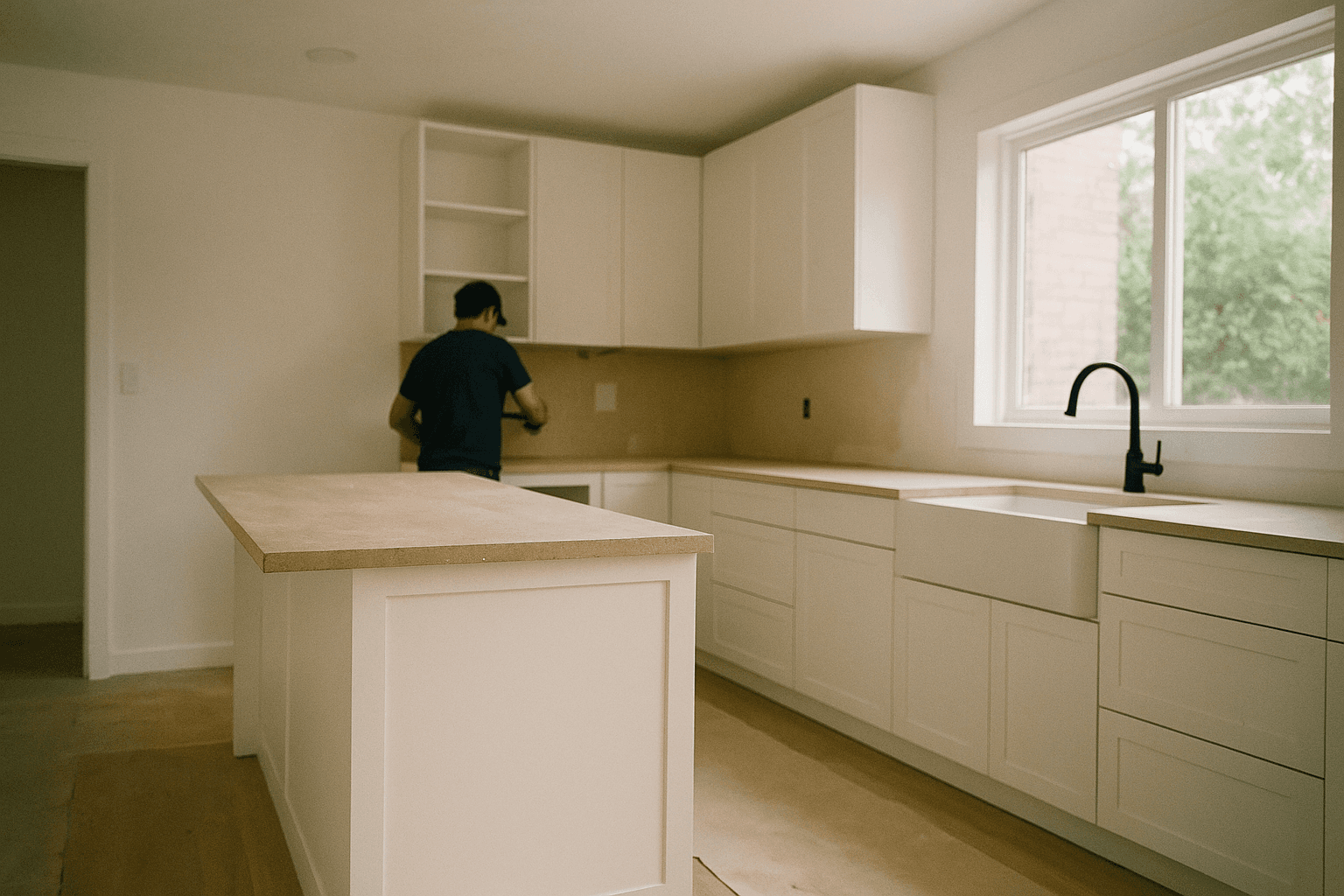
How to plan, quote and manage a Bondi kitchen renovation
This section breaks the kitchen project into clear, actionable steps: from design and permit checks to tendering trades and managing variations.
H2 1 — Start with a realistic brief and kitchen design
Write a brief: Layout changes, desired appliances, bench material (stone, laminate), cabinetry style, flooring, lighting, and appliances. Include must-haves vs nice-to-haves.
Set a budget range: Define a minimum, target and absolute maximum. Plan a 10–20% contingency for surprises.
Engage a kitchen designer or architect (if changing layout): For structural or layout changes (knocking down a wall, moving cooktop/hood), get concept drawings. Designers help lock in kitchen layout, cabinetry elevation drawings and appliance requirements.
Keywords: kitchen design, kitchen cabinetry, kitchen bench top, kitchen appliances.
H2 2 — Check local rules early (Bondi / Waverley Council specifics)
Heritage overlays: Bondi and surrounding inner-east suburbs have pockets of heritage controls. If your building is heritage-listed or in a conservation area, external works, window changes or even internal works in some listings may need approval.
Waverley Council planning and heritage pages: https://www.waverley.nsw.gov.au/planning/heritage
Development application vs Complying Development: Small internal kitchen refits usually fall under exempt or complying development but structural changes, ventilation flues or additions need development consent.
NSW Planning Portal: https://www.planningportal.nsw.gov.au/
Asbestos risk: Many Bondi homes from the 1940s–1980s may have asbestos in subfloor, walls or splashbacks. Tests and licensed removal add cost and need proper disposal.
SafeWork Australia asbestos guidance: https://www.safeworkaustralia.gov.au/asbestos
NSW EPA asbestos information: https://www.epa.nsw.gov.au/
Waste disposal and skip rules: Waverley Council has rules on building waste and disposal. Check allowable skip locations and licenced asbestos removal requirements.
Waverley Council waste: https://www.waverley.nsw.gov.au/roads_and_parking/kerbside_collection
H2 3 — Getting accurate quotes and tendering
Create a Scope of Works (SoW): This is the single most important document. It lists demolition, structural work, plumbing, electrical, cabinetry, benchtop, splashback, tiling, finishes, appliance supply and warranty terms. Provide drawings and finishes schedule.
Obtain at least three detailed quotes from: a licensed kitchen contractor, a builder with kitchen experience, and a cabinetmaker plus a separate project manager quote if you plan to coordinate trades yourself.
Quotes must include:
Itemised labour and materials
Allowances vs fixed-price items (e.g., bench top allowance)
Lead times for cabinetry and appliances
Payment schedule (staged, not upfront)
Inclusions and exclusions (e.g., asbestos removal not included)
Keywords: kitchen quotes, kitchen trades, kitchen project manager, kitchen contractor.
H2 4 — Understand the cost breakdown (must-read cost estimate section)
This is a dedicated H2 section for cost estimates — your numbers will vary depending on scope, finish level, and location-specific issues (Bondi premiums on labour and materials).
Estimated cost ranges (AUD, Inner Sydney / Bondi, 2025 indicative):
Basic refresh (cabinet doors, paint, new benchtop): $8,000 – $18,000
Cabinet refacing or door replacement: $3,000 – $8,000
Benchtop laminate: $800 – $2,500
New sink/tap: $400 – $1,200
Mid-range renovation (layout largely same, new cabinetry, benchtop, appliances): $25,000 – $55,000
Custom cabinetry: $12,000 – $25,000
Stone benchtop (engineered quartz): $3,500 – $7,500
Tiling, splashback: $1,500 – $5,000
Plumbing & electrical: $3,000 – $7,000
High-end/full remodel (layout change, structural works, premium finishes): $60,000 – $150,000+
Structural work, new windows or skylights: $10,000 – $40,000
Premium cabinetry, joinery, integrated appliances: $25,000 – $60,000+
High-end appliances (European brands): $8,000 – $30,000
Cost drivers to watch:
Structural work (load-bearing walls, steel beams): $3,000 – $15,000+
Asbestos removal: $2,000 – $10,000 depending on area and type
Council approvals and consultant fees (engineer, certifier): $1,500 – $6,000
GST and contingency: Add 10% GST where applicable and 10–20% contingency
Keywords here: kitchen renovation cost, kitchen remodelling, kitchen cost estimate, renovation timeline.
H2 5 — Sequencing works and trade coordination
Typical sequence for a full gut:
Demolition & strip out (1–3 days)
Structural or framing work (1–2 weeks if needed)
Rough-in plumbing & electrical (1 week)
Plastering, waterproofing and flooring prep (1 week)
Cabinetry install (1–2 weeks depending on custom joinery)
Benchtop templating & installation (benchtop lead time matters)
Tiling & splashback (3–7 days)
Final fit-off (appliances, plumbing, electrical) (1 week)
Snagging and final clean (3–7 days)
Lead time note: Custom cabinetry and stone benchtops can take 4–10 weeks. Appliances may be 2–8 weeks for special order items.
H2 6 — Contracting, payments and warranties
Use a written contract: It should reference the SoW, progress milestones, defects liability period, insurance and who holds the building licence.
Payment schedule best practice:
Deposit 5–10% (never more than 10% unless custom long-lead items)
Progress payments tied to milestones (demo complete, cabinetry installed, benchtop installed)
Final 5% on practical completion
Warranties:
Licensed trades should provide workmanship warranties (usually 6–12 months) and manufacturers’ warranties on appliances and cabinetry hardware.
Keywords: kitchen contractor, kitchen trades, kitchen warranty, kitchen hire.
H2 7 — Choosing the right contractor (vetting checklist)
Licensing & insurance: NSW builder’s licence (or trades licence), public liability and home warranty insurance for projects over the threshold.
Portfolio & references: Ask for recent local jobs, ideally in Bondi or inner-Sydney streetscapes similar to yours.
Trade roster: Confirm the contractor has regular plumbers, electricians and a qualified certifier.
Communication & documentation: Clear job manager, a single point of contact, and online invoicing/job diary preferred.
Red flags: Huge upfront deposit requests, vague scopes, or a contractor unwilling to provide a written warranty.
Keywords used naturally throughout: kitchen renovation, kitchen contractor, kitchen design, kitchen cost estimate, kitchen quotes, kitchen cabinetry, kitchen appliances, kitchen trades, kitchen remodelling, kitchen bench top.
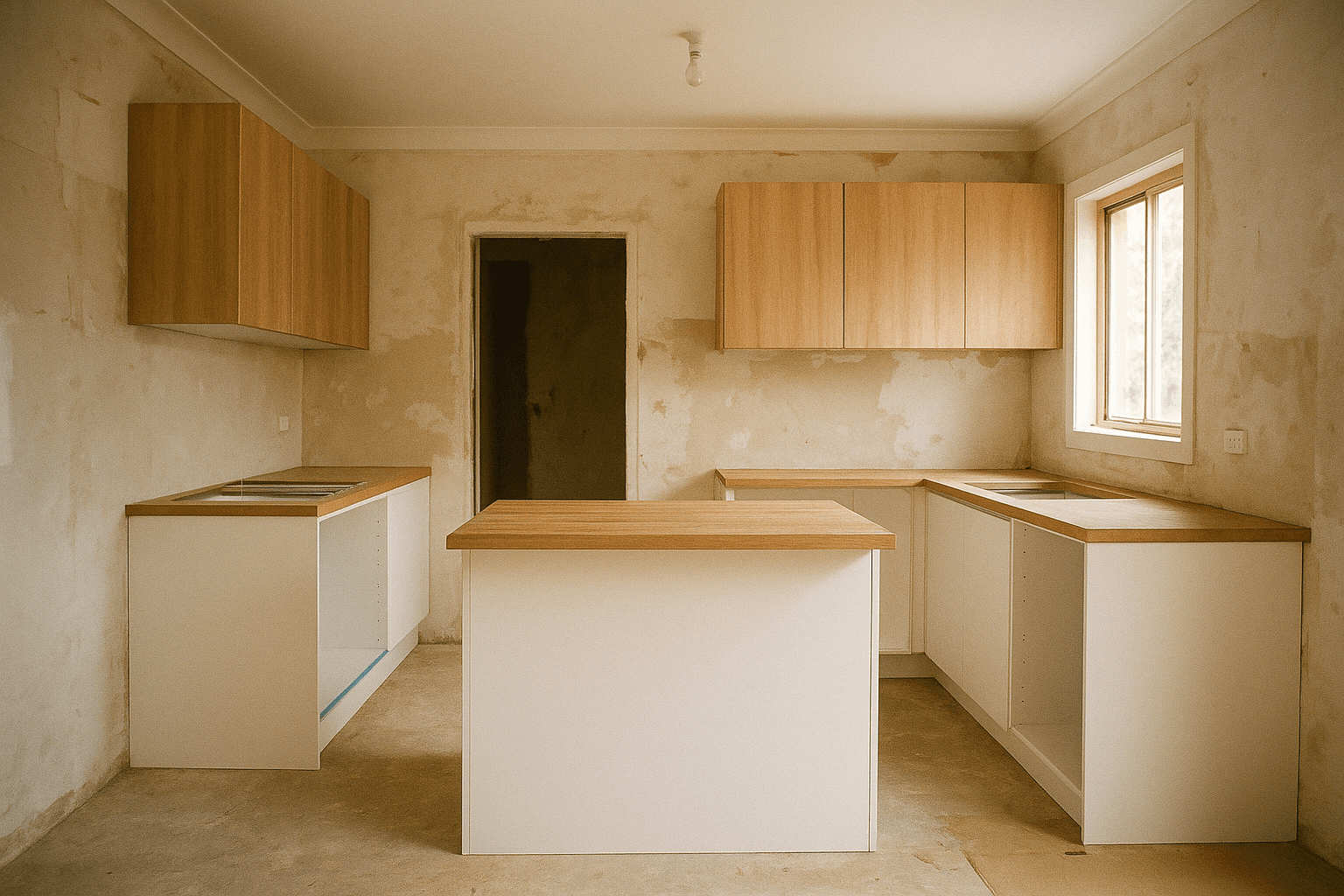
Common mistakes Bondi homeowners make and how to avoid them
H2 1 — Underestimating council and heritage work
Mistake: Starting demo before confirming heritage or development requirements.
Solution: Check Waverley Council heritage listings early (https://www.waverley.nsw.gov.au/planning/heritage) and engage a certifier or heritage consultant if your property is affected. This saves unexpected delays and redesign costs.
H2 2 — Skimping on the scope of works and documentation
Mistake: Hiring a contractor on a ballpark figure and relying on verbal agreements.
Solution: Produce a detailed Scope of Works and a fixed-price quote for identified items. Allow for provisional sums for unknowns (e.g., asbestos, structural repairs) and clarify who manages variations.
H2 3 — Choosing lowest quote without checking credentials
Mistake: Picking the cheapest kitchen contractor solely on price.
Solution: Balance price with reputation, workmanship examples, and proper licences. Ask for recent photos of finished kitchens and speak with two previous clients.
H2 4 — Not planning for a functioning kitchen during the reno
Mistake: No contingency plan — suddenly you’re eating out every night.
Solution: Plan a temporary kitchen setup (microwave, kettle, portable cooktop) or schedule works in stages so you retain some functionality. For long full-gut renos, budget extra for eating out and laundry arrangements.
H2 5 — Cheaper materials that cost more long-term
Mistake: Saving on benchtops or cabinet hardware that fails quickly.
Solution: Spend where it matters: durable benchtop (stone or quality laminate), soft-close hardware, good sinks and taps. These items affect daily use and resale value.
H2 6 — Poor trade coordination and timeline blowouts
Mistake: Relying on multiple subcontractors without a project manager.
Solution: Either hire a contractor who coordinates trades or engage a kitchen project manager. This avoids scheduling conflicts (cabinetry arriving before floors are laid) and gaps that add cost.
H2 7 — Not accounting for site-specific issues in Bondi
Mistake: Ignoring typical Bondi suburb problems like limited parking for trades, sentry hours, and higher labour rates in inner Sydney.
Solution: Include loading zones, deliveries and potential traffic delays in the contractor’s plan. Allow contractors to factor in time for restricted parking and permit requirements.
H2 8 — How to save money without cutting corners
Keep the footprint: Avoid moving plumbing and gas appliances if possible — moving services is expensive.
Refurbish rather than replace: If carcasses are sound, replace doors and hardware instead of full joinery.
Choose off-the-shelf appliances: Often cheaper and quicker than bespoke models.
Buy finishes yourself: You can source tiles, handles and lighting outside the contractor’s margin — but be mindful of responsibility for damages if the contractor installs them.
Time the project off-season: Builders may offer better prices in quieter months.
H2 9 — Final checks before sign-off
Snag list: Compile defects and incomplete items, and don’t release final retention until these are fixed.
Certificate of electrical safety and plumbing compliance: Ensure licensed trades provide these.
Final invoice vs agreed SoW: Check that the final invoice aligns with the contract and agreed variations.
H2 10 — Local voices: what Bondi residents say
People in Bondi have posted in local forums and Reddit that unexpected heritage requirements and delays in approvals were common pain points. Others noted trades access and parking made some projects longer and slightly more expensive than suburbs with easier kerb access.
A common thread: those who engaged a local contractor experienced fewer surprises, because local contractors know council quirks and typical neighbourhood challenges.
H2 11 — Final checklist before hiring a contractor
Licence and insurance verified
Written contract referencing a detailed SoW
Itemised quote with lead times and allowances
Payment schedule and retention clause (final 5–10%)
Written defect warranty and manufacturer warranties on appliances
Confirmation of who manages council approvals, certifier and inspections
Plan for temporary kitchen and contingency funds
Closing (real talk)
Renovating a kitchen in Bondi or inner-Sydney can lift your home value and change the way you live — but it can also be stressful if you rush or rely on guesswork. Use a structured approach:
Start with a clear brief and budget
Check council and asbestos issues early
Get multiple detailed quotes and an itemised SoW
Use a written contract with staged payments and retention
Work with local, licensed contractors who understand Bondi’s quirks
If you follow these steps, you’re far more likely to finish on time, on budget and with a kitchen you actually enjoy. Don’t skimp on the planning — that’s where most owners lose money. Good luck, and if you want a template SoW or a checklist tailored to your Bondi terrace, ask and I’ll point you to practical examples and local resources.
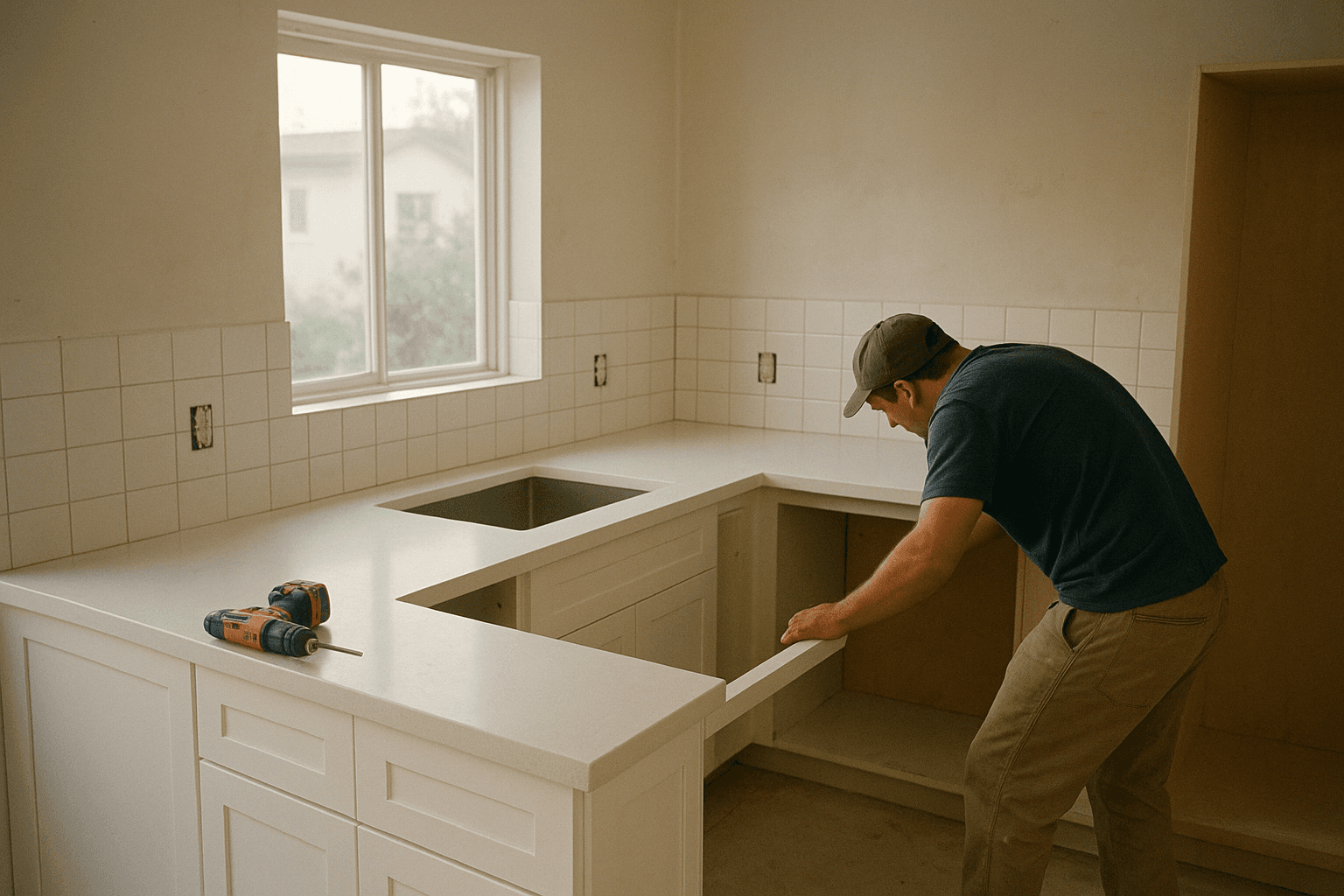
AI-Powered Renovation Expert