Written by the Instant Reno Team
The Complete Guide to Hiring Bathroom Remodel Contractors in Australia
Anyone who’s started a bathroom overhaul knows the pain: trades turning up late, hidden water damage, council paperwork, and a final bill that makes you swallow your morning cuppa twice. If you’re searching for bathroom remodel contractors, getting the planning and cost estimation right at the outset will save you weeks of stress and tens of thousands of dollars. Accurate planning determines scope, avoids nasty surprises (like asbestos or structural fixes), and keeps subcontractors on track.
This guide is written by a construction manager with 20+ years on Aussie sites — practical, no-nonsense advice that covers budgeting, step-by-step planning, realistic cost ranges and the red flags to watch for when you hire bathroom renovation contractors. Read on and you’ll be armed to get the job done on time and on budget — no dramas.
Why upfront planning matters
Scope creep kills budgets: Adding a shower niche, moving the toilet or changing the window can blow out time and cost.
Regulatory traps: Strata rules, council approvals and waterproofing standards are non-negotiable.
Trades coordination: Waterproofing before tiling, plumber rough-in before cabinetry — get sequencing right or you sit idle.
Before you ring the first contractor, get these basics sorted: desired layout, realistic budget bracket, a mood board (photos), and whether the place is standalone, strata (unit), or a heritage-listed property.
Quick checklist to have before you call contractors
Existing floor plan and photos of the bathroom
Non-negotiables (bath vs shower, double basin, heating)
Budget bracket (low / mid / high) and absolute cap
Any known hazards (asbestos, mould, timber rot)
Are you in strata? Who approves changes?
Desired completion window and flexibility
With that, you’re ready to get serious quotes from bathroom renovators and bathroom contractors Australia-wide.
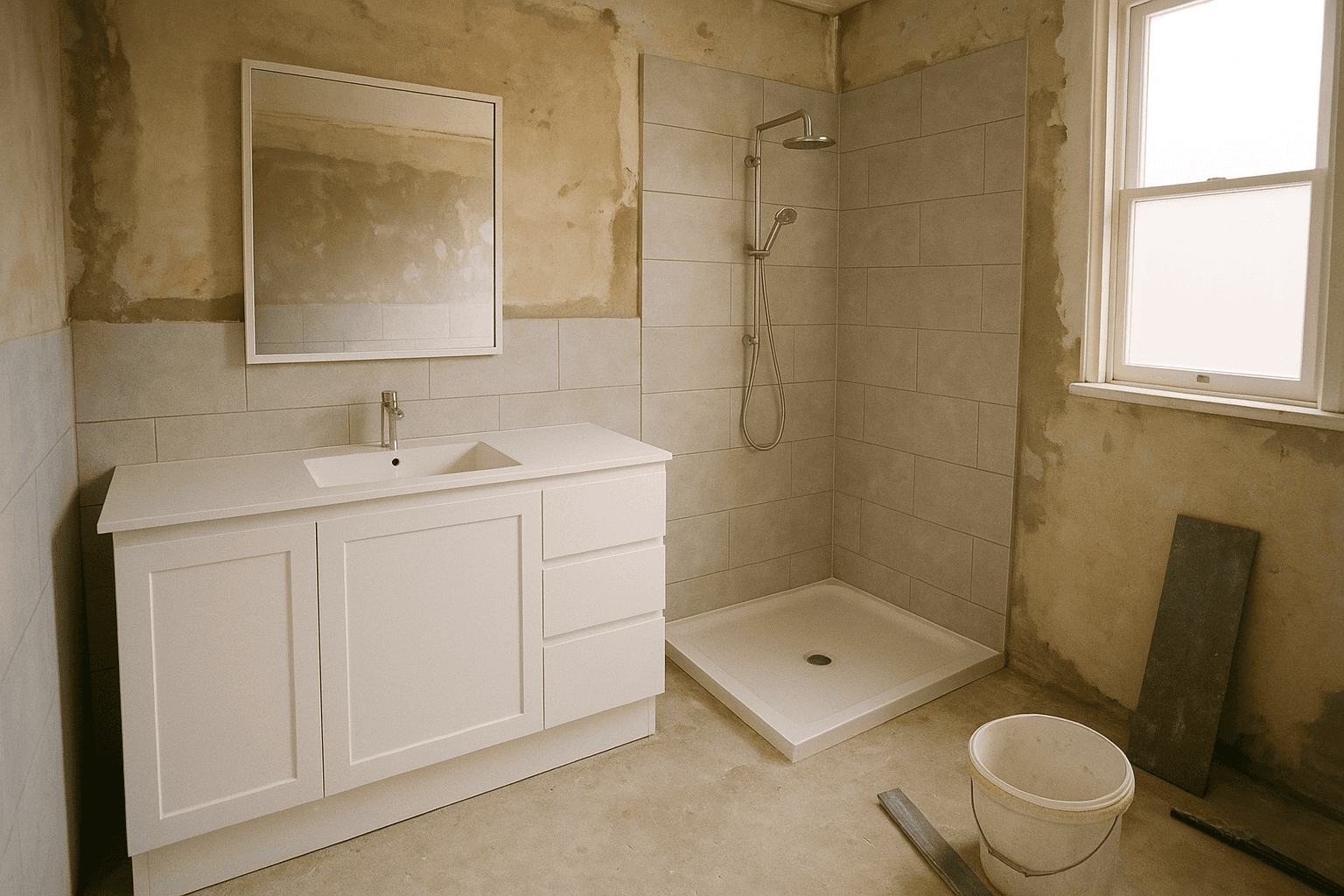
Step-by-step plan to manage a bathroom reno like a pro
1. Define the scope and priorities
Full strip-back vs cosmetic refresh: Full strip-back means removing tiles and fittings to the structural substrate — necessary if you suspect leaks, mould or poor waterproofing. Cosmetic refresh keeps existing plumbing locations and swaps tiles/fixtures.
Keep or move services: Moving the toilet, shower or vanity adds plumbing and waterproofing costs. If you can keep services where they are, you’ll save a bundle.
Accessibility and future-proofing: Consider picks like semi-frameless showers, lever taps, or shower niches to increase longevity and resale value.
2. Design and material selection
Sketch a layout and shortlist fixtures (vanity, toilet, taps, shower screen, tiles).
Choose tile sizes early — large format tiles change labour and substrate requirements.
Pick waterproofing system (sheet vs liquid) and confirm tile adhesive compatibility.
3. Engage the right bathroom remodel contractors
Licensed trades: In NSW check via Fair Trading; in QLD use QBCC. Confirm plumbers, tilers and electricians are licensed and insured.
Get 3 written quotes: One conservative low-cost, one realistic mid-range, one premium.
Ask for a staged schedule: Demolition -> plumbing -> waterproofing -> render -> tiling -> fittings -> snag.
Contracts: Use a fixed-price contract where possible with clear inclusions/exclusions, milestones and payment schedule.
4. Permits, strata and council requirements
If structural work or plumbing relocation is involved, you may need a Development Application (DA) or Complying Development Certificate (CDC) in some councils.
Strata properties often require strata committee approval and may insist on specific trades or time restrictions (noisy works). Always check your strata by-laws first.
5. Site management and quality checks
Appoint a single point-of-contact on site (you or project manager).
Daily or every-other-day check-ins during demolition and rough-in stages.
Waterproofing must be inspected and a certificate issued before tiling. Don’t let tilers proceed without sign-off.
Estimating the Costs for the bathroom remodel contractors
This section gives realistic price ranges, a materials breakdown and labour considerations for bathrooms across Australia in 2025. Prices are guides — regional variations apply (Sydney and Melbourne are pricier than regional towns).
Typical bathroom cost brackets (AUD)
Basic / cosmetic refresh: $8,000 – $15,000
Replace fixtures, repaint, retile a feature wall, new shower screen
Minimal plumbing or structural changes
Mid-range full renovation: $15,000 – $30,000
Strip back to substrate, premium fixtures, new floor and wall tiles, new shower screen, minor layout changes
High-end / luxury renovation: $30,000 – $65,000+
Structural changes, high-end stone or large-format tiles, custom joinery, heated floors, high-end tiling labour
Typical line-item estimates (average ranges)
Demolition & strip-out: $500 – $3,000
Includes removal of tiles, timber, fixtures; disposal fees may be extra if asbestos is present.
Asbestos removal (if applicable): $800 – $6,000 depending on extent (licensed removal required)
Plumbing (rough-in and fixtures): $1,000 – $7,000
Rough-in works, new shower mixer, repositioning drains increases cost.
Electrical: $300 – $2,500
Includes lighting, exhaust fan, heater, GPOs, safety switches.
Waterproofing (walls & floors): $1,000 – $4,000
Mandatory to Australian Standards AS 3740; must be certified before tiling.
Tiling (materials + labour): $2,000 – $8,000
Tiles $30 – $120/m2; labour $40 – $90/m2 depending on complexity.
Shower screen/glass: $400 – $2,500
Vanity & basin units: $300 – $4,000
Toilet suite: $150 – $1,200
Fixtures & fittings (tapware, accessories): $300 – $3,000
Custom joinery / painting: $500 – $3,500
Contingency (recommended): 10% – 20% of project cost
Council fees / permits: $0 – $2,000 (varies by council and scope)
Labour rates and allowances (typical in 2025)
Plumber: $100 – $180/hr (call-out and specialised work higher)
Tiler: $60 – $110/hr (high-end mosaic or complex layouts cost more)
Electrician: $90 – $150/hr
Carpenter / Joiner: $70 – $130/hr
Project manager / builder supervision: may be charged as a percentage (8%–15%) or per day
How to read and compare quotes
Check inclusions: waterproofing brand, tile adhesive, grout type, mirror, exhaust fan.
Ask about warranties: workmanship guarantee, manufacturer warranties for fixtures, and Home Warranty Insurance (required in NSW for jobs > $20k).
Payment schedule: typical is deposit 10–20%, staged payments tied to milestones (e.g., rough-in complete, waterproofing complete, tiling complete), final 5–10% on sign-off.
Hidden costs to budget for
Discovery of rot or structural repairs after strip-out: $1,000 – $15,000+
Non-compliant previous work (old waterproofing): rework costs
Out-of-hours work in strata or holiday spots attracting extra fees
Temporary accommodation if your only bathroom is out of action
Sample project cost breakdown — mid-range $25k bathroom (example)
Demolition & disposal: $1,200
Plumber rough-in & fixtures: $4,500
Waterproofing (certified): $2,200
Tiling (walls & floors): $5,000
Vanity, basin & joinery: $2,800
Shower screen & glass: $1,200
Electrical & lighting: $1,000
Toilet & cistern: $600
Painting, trims & finishes: $800
Labour coordination & project management: $2,000
Contingency (10%): $1,700
Total: ~$23,000–$26,000 depending on finishes
Contracts, deposits and payment best-practices
Never pay more than 20–30% deposit for residential renovations. For larger projects, stage payments tied to tangible milestones is standard.
Get deliverables in writing: scope, brands, tile sizes, warranties, timeline and penalties for late completion if important to you.
Hold back final payment (5–10%) until after final inspection and snag list completion.
Ensure insurance: ask for public liability insurance and, if in NSW and job over $20k, Home Building Compensation Fund (HBCF) details.
Local example: Bondi, NSW — things to watch for
Bondi is beach-front, often windy and salt-laden. Older fibro and pre-1990 homes can contain asbestos and moisture-related rot.
Asbestos and disposal: If your Bondi reno reveals fibro sheeting or cement sheet, you must use a licensed asbestos removalist.
Strata and time limits: Many Bondi apartments are strata-managed with noise restrictions and specific renovation windows. Check your by-laws.
Council approvals: Waverley Council has building and planning pages with specifics on approvals for renovations.
Useful local links and sources:
Waverley Council — building and development: https://www.waverley.nsw.gov.au/building_and_development
SafeWork NSW — asbestos info: https://www.safework.nsw.gov.au/hazards-a-z/asbestos
NSW Fair Trading — strata and contractor licensing: https://www.fairtrading.nsw.gov.au/
NSW EPA — asbestos disposal guidance: https://www.epa.nsw.gov.au/your-environment/asbestos
People in Bondi have reported on local forums that communication and timing were the most common complaints — trades booking in but not showing up, and hidden costs after strip-out. Others praised local bathroom remodel contractors who provided strong project management and fixed-price contracts that avoided surprises.
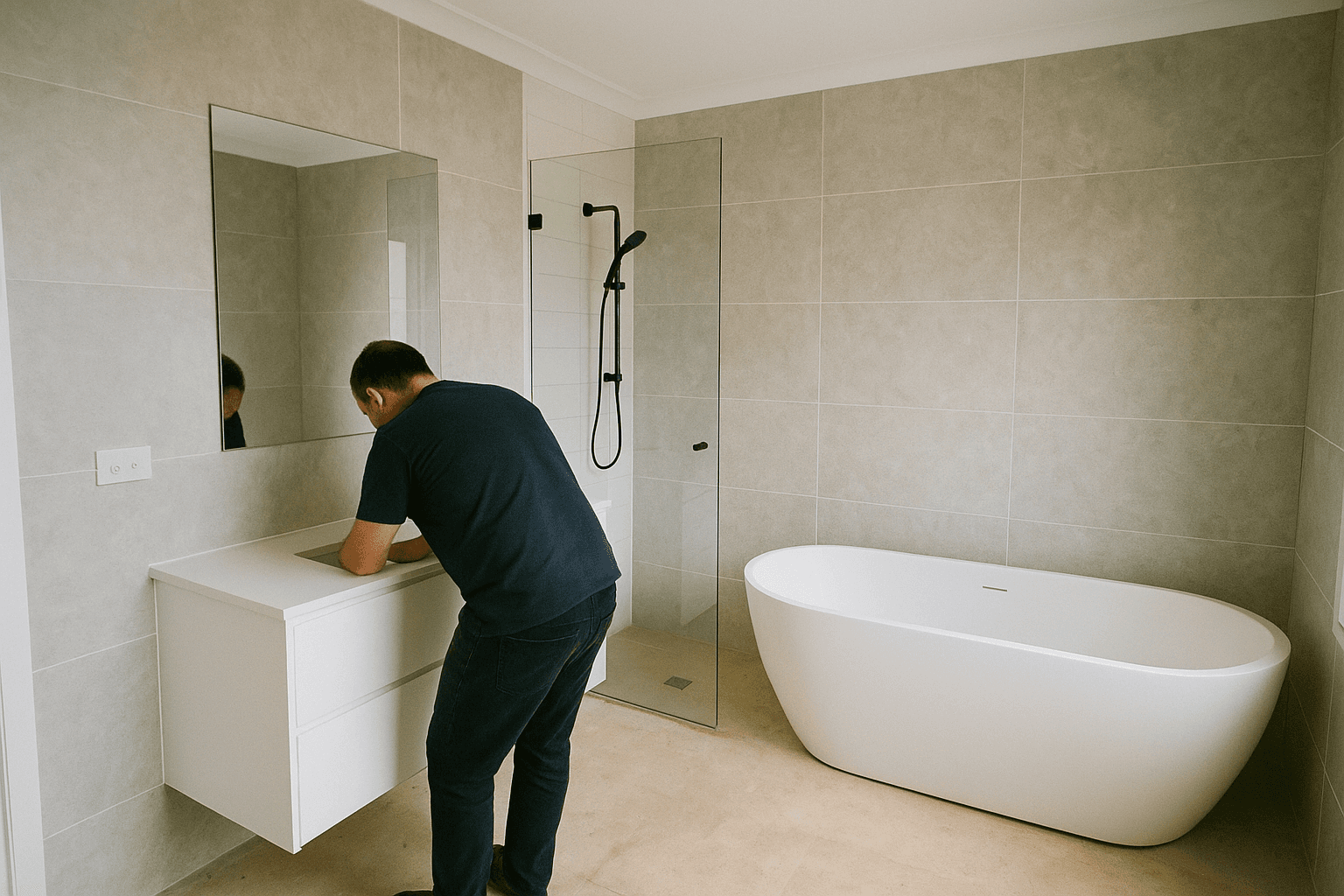
Avoiding the common cock-ups — what homeowners get wrong and how to avoid them
Mistake 1 — Choosing the cheapest quote without vetting
A low quote often hides corners cut on waterproofing or uses unlicensed trades. Always verify:
Licence numbers and insurance
Recent job references and photos
Written guarantees for waterproofing and tiling
How to avoid it: Prioritise a reputable bathroom renovation contractor with a clear contract over the cheap dodgy quote.
Mistake 2 — Not allowing a contingency
Even simple jobs unearth surprises. Always budget a minimum 10–15% contingency — 20% for older homes or heritage properties.
Mistake 3 — Letting trades work without sign-offs
Waterproofing and plumbing rough-in must be inspected (and signed off) before tiling. If tilers tile over poor waterproofing, you’ll pay again when it leaks.
How to avoid it: Include mandatory inspection stages in your contract and refuse to pay the tiling deposit until waterproofing is certified.
Mistake 4 — Over-customising fixtures late in the job
Changing tapware, tiles or vanity after order leads to delays and extra shipping costs.
How to avoid it: Finalise selections and order early. Allow lead-times for custom vanities, stone tops and certain tapware.
Mistake 5 — Ignoring strata and local council rules
Units and heritage properties often have specific rules about noise, work hours, or materials.
How to avoid it: Check strata by-laws and council planning pages before signing a contract. Factor time for approvals into your schedule.
Save money without cutting corners — practical tips
Keep plumbing locations where possible — relocate only if there’s a strong reason.
Mix high and low: splurge on tapware and showerheads (touchpoints) but use mid-range tiles that look great for less.
Prefinished vanities over custom carpentry reduce cost and lead-time.
Buy fixtures yourself only if you’re confident in warranty terms and installation standards — otherwise get the contractor to supply and warranty.
Get multiple quotes for high-ticket items like custom stone benchtops or frameless shower screens.
Questions to ask bathroom remodel contractors before hiring
Are you licensed and insured? Can you provide licence numbers and insurance certificates?
Have you worked on similar bathrooms in my suburb or building type?
Can you provide a staged schedule and milestone payment plan?
What waterproofing system will you use and what warranty comes with it?
Who coordinates the trades and who is my on-site contact?
What happens if we find structural issues or asbestos during demolition?
Final words — getting it right
Renovating a bathroom is one of the best value home improvements you can make, but it’s also one of the most technical. Employ a bathroom remodel contractor who can manage trades, paperwork and sequencing — someone who treats the project like a small construction job, not a DIY weekend.
Stick to a clear brief, verify licences, insist on waterproofing certification, allow a sensible contingency and lock the works into a contract with staged payments. Do that and you’ll end up with a bathroom that looks great, functions better and retains resale value — without the usual heartburn.
If you want, send through a few photos and your rough budget and I’ll suggest the realistic scope and where to allocate your spend for the biggest bang-for-buck.
AI-Powered Renovation Expert