Written by the Instant Reno Team
The Practical Guide to Hiring a Contractor for Kitchen Remodel in Australia
Many homeowners start by searching for contractor for kitchen remodel when they realise a simple reno quickly turns into a project that needs proper management. Whether you’re updating benchtops, ripping out cabinets or doing a full kitchen renovation, accurate planning and a realistic cost estimate are critical to avoid nasty surprises, blown budgets and long delays.
In this opening section I’ll explain the most common pain points: uncertain quotes, variations, council hurdles, asbestos in older homes, and trades coordination. I’ll also outline why taking time with planning and a professional cost estimate pays for itself in stress saved and value added.
Why planning and cost estimation matter
Budget certainty: A detailed cost estimate stops a tradie’s vague “rough idea” from blowing out your finances. If you’re relying on one number from a mate’s mate, you’ll likely find hidden costs later — demolition surprises, extra plumbing, or structural beams.
Scope clarity: Defining what’s in and out of scope prevents arguments mid-project about who pays for what. Does the contractor include new splashback tiling? Are relocations of electrical points covered?
Time management: An accurate timeline helps you plan living arrangements, appliance replacement, and minimise downtime of a busy household.
Council & compliance: Some kitchens need building permits, energy efficiency compliance, or even heritage approval — skipping those burns time and money.
Common kitchen reno scenarios
Cosmetic refresh: Replace doors, handles, splashback, benchtop and paint. Lower cost, shorter timeline.
Layout rework: Moving the sink, stove or walls. Requires structural checks, plumbing and electrical and possibly permits.
Full gut-and-replace: Strip to studs, new floor, cabinets, appliances, services — highest cost, highest disruption.
Keywords covered upfront
This guide uses and explains essential terms you’ll see in quotes and contracts such as kitchen renovation, kitchen remodel, cost estimate, kitchen design, cabinetry, benchtop, splashback, tradie, building permit and contingency to help you understand quotes and avoid surprises.
Quick checklist before you call a contractor
Measure your kitchen and make a rough layout.
Decide if you want to keep the same layout or change it.
Note any suspected asbestos (usually pre-1990 houses).
Have a list of must-haves and nice-to-haves.
Set a realistic budget range (not the maximum credit limit).
Prepare three questions for each contractor: timeline, inclusions and warranty.
This lays the foundation. Next, we dive into a practical step-by-step process to choose the right renovation contractor, get accurate cost estimates and manage the job so you finish on time and on budget.
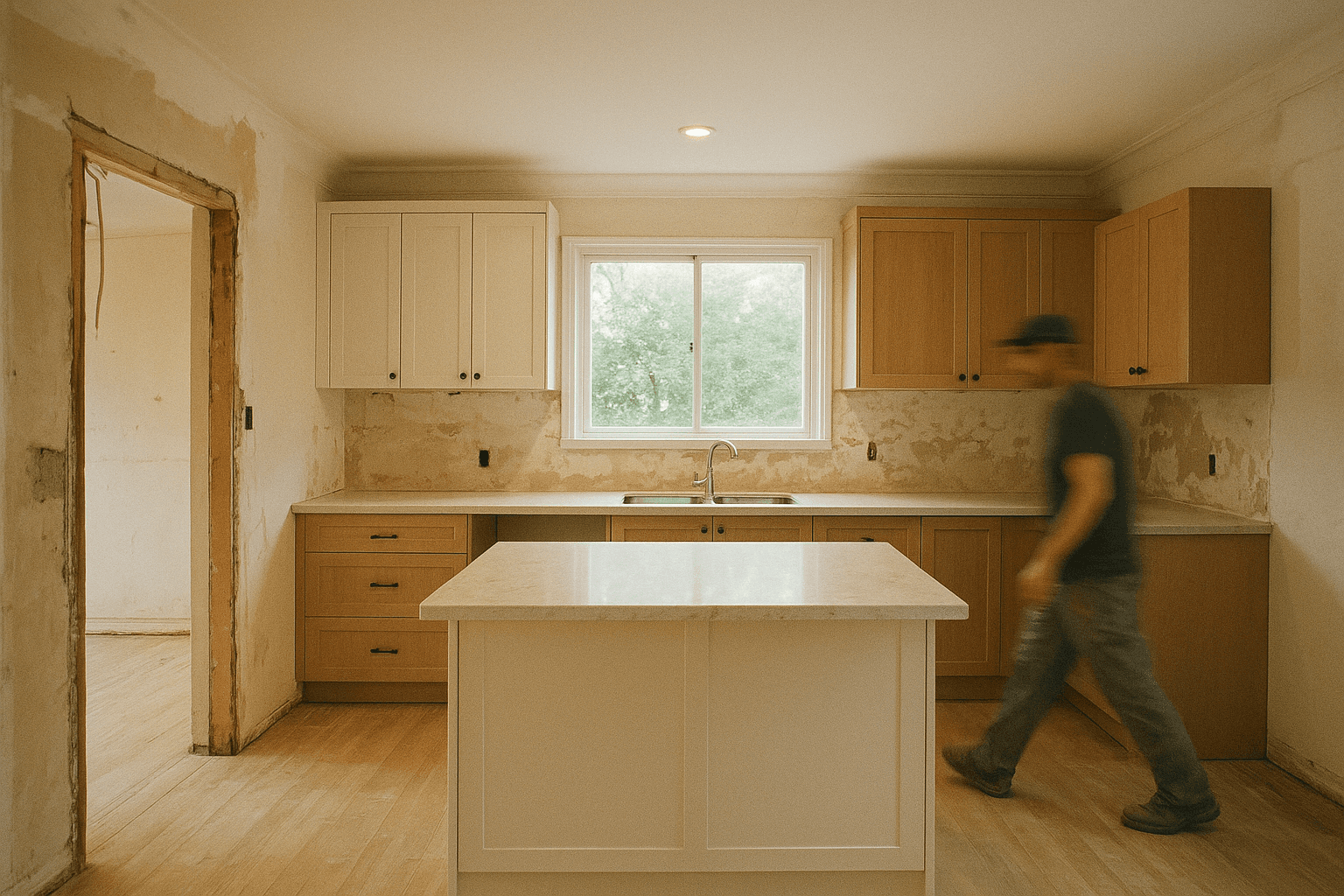
How to plan, estimate and manage a kitchen remodel — step by step
This section breaks the process into actionable steps you can follow from first idea to handing over the finished kitchen. Use it as your project playbook.
H2 - Step 1: Define the scope and brief
Decide scope: Cosmetic, layout change or full gut. This determines whether you need a structural engineer, certifier or architect.
List priorities: Bench height, appliance size, storage needs, lighting, flooring and finishes.
Gather inspiration: Photos, cabinetry styles, benchtop materials (stone vs laminate), splashback tiles. Save them into a folder to share with contractors and designers.
Set a functional brief: How many people will use the kitchen, preferred cooking style and if you want open plan.
Why it matters: Contractors price very differently for the same job. A precise brief reduces variance in quotes.
H2 - Step 2: Engage a designer or go straight to a contractor?
Designer-led: Best for layout changes, complex cabinetry and bespoke solutions. Designers produce detailed drawings and specifications that builders can price accurately.
Contractor-led: Best for cosmetic updates or if the contractor has an in-house kitchen designer/joiner.
Trade-off: Paying for a professional plan upfront adds about 1–3% to the project but reduces variations and helps get fixed-price quotes.
H2 - Step 3: Get multiple quotes and compare apples with apples
Aim for 3 quotes: From a licensed renovation contractor, a kitchen specialist/joiner and a builder who manages trades.
Request itemised quotes: Labour, materials, cabinets, benchtop, appliances, plumbing, electrical, tiling, painting, demolition, waste removal, council fees.
Check inclusions: Appliances — brand and model, warranty; benchtop material; cabinet hardware; painting coats; waterproofing; tile grout type.
Ask about provisional sums: Items that can’t be fully priced (e.g., structural works if the wall contains a beam). Provisional sums should be clearly noted.
Look for exclusions: Asbestos removal, unexpected rotten timber, permit fees.
Keywords here: quotes, itemised quotes, provisional sums, builders, kitchen cabinetry, appliances.
H2 - Step 4: Understand typical Australian costs (benchmarks)
Costs vary by city and quality level. Rough national benchmarks (2026 Australian dollars):
Cosmetic refit: $10,000–$25,000 — new cabinet doors, benchtop laminate, splashback, repaint.
Mid-range remodel: $25,000–$60,000 — new cabinets, stone or engineered benchtop, tiling, appliances mid-range, plumbing and electrical upgrades.
High-end remodel: $60,000–$150,000+ — custom joinery, stone or quartz benchtop, structural changes, premium appliances, integrated systems.
Typical line items and approximate costs:
Cabinets and joinery: 30–40% of budget.
Benchtops (laminate $800–$2,000; engineered stone $2,000–$8,000+).
Appliances: $2,000–$15,000 depending on brand and features.
Plumbing & electrical: $2,000–$10,000.
Tiling and splashback: $800–$5,000.
Floor finishes: $1,000–$8,000.
Demolition and waste removal: $700–$3,000.
Structural and council fees: $500–$10,000 (depending on extent).
H2 - Step 5: Get the contract right
Use a written contract: Fixed price or cost-plus with a clear hourly or daily labour rate.
Include a detailed schedule of works: Milestones and payment stages.
Payment schedule: Typical is 10% deposit, progress payment 30–50%, final 10% on completion — never pay everything up-front.
Retention clause: Hold back 5–10% until defects rectified.
Warranty & insurance: Contractor’s public liability, home indemnity insurance (if over $20,000), and manufacturer warranties for appliances.
Variations process: How scope changes are costed and approved.
Keywords: contract, fixed price, cost-plus, payment schedule, warranty, public liability.
H2 - Step 6: Manage the timeline and trades
Create a timeline: Include demolition, rough-in plumbing & electrical, cabinetry install, benchtop templating and installation, tiling, painting and final fit-off.
Sequencing: Electrical and plumbing rough-in before plaster and cabinetry. Templating for benchtop after cabinets are installed and walls finished.
Communicate weekly: Set a single point of contact (project manager or lead tradie).
Living arrangements: Plan for a secondary cooking area, fridge access and cleaning routines.
Keywords: timeline, project manager, trades coordination, templating.
H2 - Step 7: Inspect, test and finalise
Practical completion: Walk through with the contractor and checklist all items.
Snag list: Add final defects and agree timeframe for fix.
Appliance commissioning: Ensure warranties are activated and instruction manuals supplied.
Receipts and certificates: Collect certificates for electrical, gas, and any building work. Keep them for resale value and insurance.
This step-by-step approach reduces risk and gets your kitchen finished to a high standard without endless wrangling.

Common mistakes homeowners make and how to avoid them
This section covers the most frequent slip-ups in kitchen renovations and how to save money without cutting corners.
H2 - Mistake 1: Choosing solely on price
Problem: The cheapest quote often excludes key items or uses inferior materials. A low quote can balloon once variations are added.
Fix: Compare itemised quotes line by line. Check materials, cabinet carcass thickness, hardware brands, benchtop specification and labour rates.
Tip: If a quote seems too good to be true, ask for references, a portfolio and site visits to recent jobs.
Keywords: cheap quote, itemised quotes, materials, cabinet carcass.
H2 - Mistake 2: Inadequate planning for services
Problem: Moving sinks, gas cooktops or drainage adds significant cost. Homeowners sometimes forget about rewiring, ventilation and gas certification.
Fix: Include all service relocation costs in the brief and get a licensed plumber and electrician to quote upfront.
Saving idea: Keep plumbing and gas in current locations where possible to save big dollars.
Keywords: plumbing, electrical, gas, ventilation.
H2 - Mistake 3: Not allowing for asbestos and hidden defects
Problem: Older homes (pre-1990s) can contain asbestos under benchtops, flooring glue, splashbacks or behind walls. Removing it is costly and must be handled by licensed removalists.
Fix: If your home is old, budget an asbestos inspection ($300–$600) and removal ($1,500+) as a contingency. Contractors should flag this in site inspections.
Local note: In some states councils require notifications for asbestos removal — check your state guidelines.
Keywords: asbestos, asbestos removal, old house, contingency.
H2 - Mistake 4: Poor contract terms and payment schedules
Problem: Paying high deposits or not having a retention can leave you exposed to incomplete work.
Fix: Use staged payments tied to milestones. Keep the final 5–10% until all snags are fixed.
Legal safety: For works over $20,000 ensure the contractor provides Home Building Compensation Cover in NSW (and equivalent in other states).
Keywords: payment schedule, retention, home building compensation cover, milestones.
H2 - Mistake 5: Not planning for living through the reno
Problem: Families underestimate disruption. Kitchens are the heart of the home — dust, noise and lack of cooking facilities add stress.
Fix: Set up a temporary kitchen, keep frequently used items accessible and arrange for dust containment.
Saving idea: Schedule trades so wet trades (tiling, plastering) are grouped — this reduces drying time and overlaps.
Keywords: temporary kitchen, dust containment, schedule trades.
How to save money without cutting quality
Reuse quality items: Keep good appliances or hardware. Repainting cabinets and swapping doors can be affordable.
Choose smart materials: Laminate benchtops and quality laminate cabinetry can look great at a fraction of stone costs.
Standard sizes: Custom cabinetry costs more. Go modular where possible.
Buy appliances in sales: Wait for EOFY or Boxing Day for savings, but ensure delivery aligns with installation timelines.
Bundle trades: Use a contractor who coordinates trades — they often get trade discounts and reduce management overhead.
Keywords: save money, laminate, modular cabinetry, appliance discounts.
What to watch out for during the job
Unscheduled absences: If key trades go missing for more than a few days, get an explanation in writing.
Scope creep: Keep changes documented as variations with price and timeframe.
Quality checks: Regularly inspect work against drawings. Spot issues early.
Final sign-off: Don’t release final payment until you have practical completion, certificates and keys.
Keywords: variations, scope creep, practical completion, final payment.
Trades, licensing and insurance — must-knows
Licensed trades: Always hire licensed electricians and plumbers. Check their licence numbers and ABN.
Builder’s registration: In many states builders must be registered if the job value exceeds certain thresholds. Verify registration and insurances.
Insurance: Confirm public liability and, if applicable, home indemnity or domestic building insurance.
Keywords: licensed trades, builder registration, public liability, home indemnity insurance.
Social proof — what homeowners report on forums
Across local forums and Reddit threads, many Australians report that projects with a detailed brief and fixed-price contracts finish with far fewer disputes. Common comments include:
"Got three itemised quotes and used a kitchen designer — project finished on budget and less stress."
"Avoided moving the sink and saved a fortune on plumbing."
"Held 10% back until minor snags were fixed — worked well."
These general experiences line up with best practice: plan carefully, get multiple quotes, and lock down scope and payments in writing.
Final checklist before you sign
Measure and confirm layout and appliance sizes.
Obtain at least three itemised quotes.
Confirm licences, insurances and references.
Check warranties on products and workmanship.
Agree a detailed contract with milestones and retention.
Allow a 10–20% contingency for unexpected costs.
If you follow this guide you’ll be in a strong position to hire the right contractor for your kitchen remodel, get an accurate cost estimate, and manage the reno so you end up with a kitchen that’s functional, durable and adds value to your home. Good luck — and remember: a well-managed reno saves you money, time and a lot of grief in the long run.

AI-Powered Renovation Expert