Written by the Instant Reno Team
Facing the Nightmare That Starts as a Tight Budget
If you’re on the Gold Coast and hunting for a reliable contractor for kitchen remodel, you know the pain: quotes that vary wildly, unclear inclusions, trades that vanish, and hidden costs that blow the budget. Good planning and an accurate cost estimate aren’t optional — they’re the difference between a smooth, on-time reno and months of headaches, extra bills and dodgy workmanship.
Getting a proper kitchen renovation starts the minute you decide to upgrade. This guide is written by a construction manager with 20+ years on Australian renovation sites. I’ll walk you through what a contractor should do, how modern photo-based estimating tools work (step-by-step, without jargon), what to expect on the Gold Coast specifically, and how to pick the contractor for kitchen remodel jobs that actually deliver.
Why accurate planning matters
Control costs: An itemised estimate prevents surprise fees — demolition, disposal, new framing, water damage repairs and council fees add up quickly.
Manage time: A clear scope reduces trade overlap and delays. Your contractor should provide a timeline and trade schedule.
Control quality: Specified materials, fixtures and workmanship standards avoid the ‘cheap instead of suitable’ trap in coastal conditions.
Right away, ensure the contractor for kitchen remodel you’re talking to is licensed, insured, and can supply a detailed written quote with a scope, inclusions, timeline and payment schedule.
Quick local facts — what makes the Gold Coast different
Coastal exposure: Salt-laden air means stainless fixings, marine-grade hardware and corrosion-resistant materials are often necessary.
Older housing stock: Many homes (especially near Southport, Nobby Beach and parts of Burleigh) pre-date strict asbestos bans — expect asbestos checks for demolition works.
Council rules: Some suburbs have heritage overlays or planning constraints — kitchen internal changes usually don’t need heritage approval, but structural changes and window/door repositioning might. Check Gold Coast City Council guidance before major structural work: https://www.goldcoast.qld.gov.au/services/building-and-development
Step-by-Step: How to Hire, Estimate and Manage a Kitchen Remodel
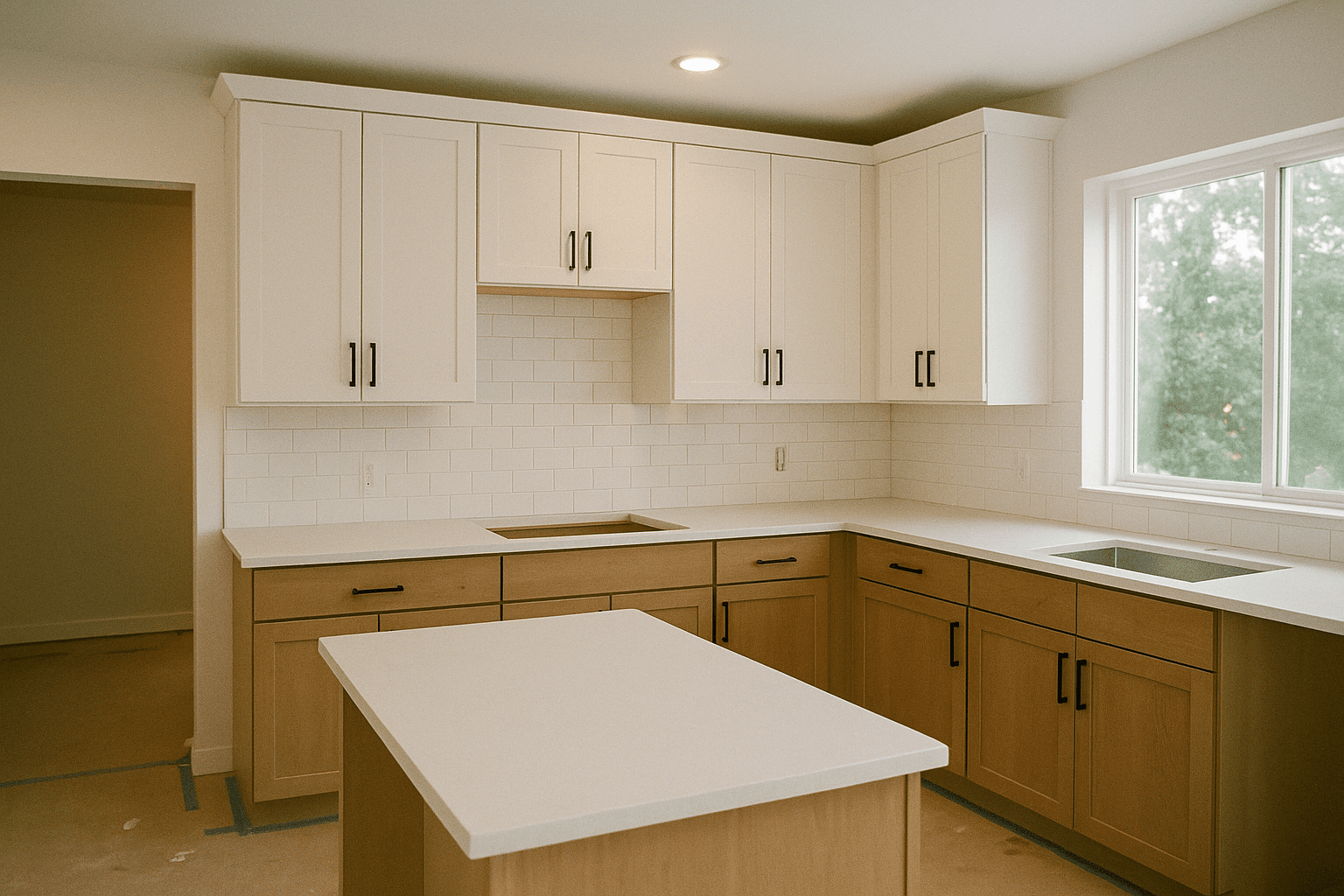
This section breaks the whole job down into practical steps, including exactly how a modern photo-analysis estimating tool inspects a kitchen photo to create an accurate, itemised estimate — explained in plain language so you can verify the contractor’s figures.
1. Pre-quote preparation
Set priorities: What drives your decision — layout change, storage, bench space, appliances, resale value?
Collect inspiration: Photos, dimensions and a short brief. If you have a floorplan, even better.
Budget band: Have a realistic range. On the Gold Coast, expect:
Minor refresh (no layout change): $8k–$18k
Mid-range remodel (cabinetry + benchtops + appliances): $25k–$55k
Full custom remodel (layout change, structural works): $60k–$120k+
These figures depend on materials and labour availability. Coastal suburbs and tricky access (narrow entries, steep blocks) can push costs up due to extra handling or scaffolding.
2. How the contractor/estimating tool analyses your kitchen photo (step-by-step)
Many modern contractors use an imaging tool to speed up and improve accuracy of quotes. Here is exactly how that process should work — ask your contractor to show each step in their estimate so you can trust the numbers.
Image capture and reference: The estimator requests a set of photos — wide shots from both ends of the kitchen, a photo of the metre box or a tape measure in frame as a scale reference. Clear photos reduce measurement errors.
Pre-processing: Photos are corrected for perspective and lighting so lines (walls, benches, windows) are straight. This helps accurate measurement and component detection.
Feature detection: The tool identifies key kitchen elements — cabinetry runs, appliances (oven, dishwasher, fridge cavity), sink and tap positions, cooktop and rangehood, island bench, bulkheads, and structural walls.
Dimension estimation: Using the scale reference, the software estimates lengths and areas — linear metres of cabinetry, benchtop area, flooring area, splashback area. The contractor cross-checks these with on-site tape measurements for critical items.
Condition and scope flags: Photos reveal water stains under sinks, mould, rot, or damaged cabinetry. The estimator flags these for allowance (e.g., replace rotten nogging, repair floor substrate) rather than assuming a straight swap.
Accessibility and logistics check: Narrow hallways, stairs, or no parking area are flagged because they increase labour time and may require protective coverings or external skip bins.
Bill of quantities and cost build-up: The tool outputs a quantified list — linear metres of cabinetry, number of panels, benchtop material area, plumbing relocations, electrical points. The contractor applies local labour rates and supplier prices to produce an itemised quote.
Confidence scoring and site validation: Each item may carry a confidence score (e.g., high, medium, low) based on photo clarity. Low-confidence items are highlighted and require on-site verification. A reputable contractor will include these contingencies and schedule a short site visit where necessary.
What this means for you: A photo-based estimate is fast and often accurate for standard kitchens. But always insist on a short site inspection for anything structural, hidden (like floor damage), or where mains relocation is required.
3. What a complete, professional quote includes
Itemised scope: Demolition, disposal, cabinetry (manufacturer and model or specification), benchtop type, hardware, appliances and model numbers, sink and tap, splashback material, flooring, lighting and electrical work, plumbing, painting, and finishes.
Labour breakdown: Hours or days per trade (demolition, plumber, electrician, cabinet maker, tiler, painter), and total labour cost.
Allowances and provisional sums: For unknowns like concealed water damage or rewiring. These should be explicit, with a clear change-order process.
Start and completion dates: Contractual start date, total days on site, and critical milestones (cabinet assembly, benchtop templating & installation, appliances fit-off).
Payment schedule and warranties: Deposit (reasonable 10–20%), progress payments tied to milestones, final payment on practical completion. Include statutory warranties and manufacturer warranties for appliances and joinery.
4. Permits, approvals and regulatory checks on the Gold Coast
Most internal kitchen works don’t require development approval, but structural alterations, plumbing fixture relocations, and electrical upgrades do. Important local contacts:
Gold Coast City Council — building and development information: https://www.goldcoast.qld.gov.au/services/building-and-development
Queensland Building and Construction Commission (contractor licensing and dispute guidance): https://www.qbcc.qld.gov.au
Gold Coast Council — heritage information (check if your property is in a heritage overlay): https://www.goldcoast.qld.gov.au/community/arts-culture/heritage-places
Before you sign: ask the contractor to confirm they will arrange any building approvals and provide proof of licencing and insurance (public liability and workers’ compensation). For trades, insist on licensed electricians and plumbers registered in Queensland.
5. Sample cost build-up — typical mid-range Gold Coast kitchen (example)
Demolition & tidy, disposal (incl. asbestos check if pre-1987 build): $1,500–$3,500
Cabinetry (semi-custom, laminated doors): $12,000–$22,000
Benchtop (engineered stone): $3,500–$7,000
Appliances (mid-range oven, cooktop, rangehood, dishwasher): $3,500–$8,000
Plumbing & tapware: $1,200–$3,000
Electrical & lighting (downlights, LED strips, power points): $1,500–$4,000
Flooring & tiling (splashback): $1,500–$5,000
Painting, finishes & commissioning: $1,000–$3,000
Contingency and site logistics: 10–20% of job value (inc. scaffolding, restricted access fees)
Total mid-range kitchen: $25k–$55k (as above). Coastal conditions or structural works can push this higher.
6. Timeline and trade sequencing
Week 0: Contract signed, permits lodged (if required).
Week 1: Pre-start meeting, site protection.
Week 2: Demolition & rough-in plumbing/electrical.
Week 3–4: Subfloor repairs, framing and plastering as needed.
Week 5–6: Cabinet installation and benchtop templating.
Week 7: Benchtop installation, tiling, painting.
Week 8: Appliance installation, final plumbing & electrical, practical completion.
Delays are common if cabinetry lead-times are long or if council inspections slow things down — factor in an extra 1–2 weeks for these risks.
Common Traps, Local Gotchas and How to Save Without Cutting Corners
Red flags when hiring a contractor for kitchen remodel
Vague quotes: If the quote is a single lump-sum with no breakdown, walk away. You need line items for demolition, cabinetry, plumbing, electrical and provisional sums.
Cash-only or huge upfront deposits: Standard practice is a small deposit (10–20%), with staged payments tied to milestones. Avoid paying more than 30% upfront for residential renovation work.
No local references or licence: On the Gold Coast you can check contractors with the QBCC — get licence numbers and verify them at https://www.qbcc.qld.gov.au.
Unwillingness for site visits or to show previous local jobs: A decent contractor will show recent projects in nearby areas like Burleigh Heads, Southport or Surfers Paradise.
Gold Coast-specific pitfalls
Salt & corrosion: Cheap hardware will fail faster in beachfront suburbs. Specify stainless or marine-grade fixings for external doors and any exposed hardware.
Asbestos risk: In pre-1980s fibro houses, kitchen removal can expose bonded or friable asbestos. If your house was built before asbestos bans, insist on an asbestos inspection and licensed removal where needed. See Queensland asbestos guidance: https://www.qld.gov.au/community/safety/police-and-emergency-services/asbestos
Heritage overlays: If your property is in a heritage precinct (check Gold Coast Council heritage pages), internal changes might be less restricted but some external or window changes could be controlled. Check first: https://www.goldcoast.qld.gov.au/community/arts-culture/heritage-places
Site access and parking: Narrow suburban streets or units in inner-city areas like Surfers Paradise can add labour time for carrying materials; allow extra for man-hours or skip placement.
How to save money without sacrificing durability
Keep plumbing run locations the same: Re-locating sinks or cooktops is expensive. Retain services where possible and redesign around them.
Mix finishes smartly: Use a high-end stone benchtop in visible areas and a simpler laminate on an island underside or pantry shelf to save costs.
Buy appliances yourself but get trade warranties confirmed: You can sometimes save by sourcing mid-range appliances during sales. Make sure the contractor will still provide fit-off and warranty paperwork.
Get at least 3 written quotes: Compare like-for-like scopes. Price differences often come down to allowance assumptions — ask what’s excluded.
Re-use where reasonable: Heavy-duty sinks, good quality taps and sound appliances can be re-used after polishing — replacing only cabinetry or benchtops can keep costs down.
Contract clauses and negotiating tips
Clear variation process: The contract must state how variations are priced and authorised. No verbal agreements — get it in writing.
Retention or defect period: Standard is a 12-month defect liability for finishing trades and statutory warranties for structural issues. Ensure the contract states these terms clearly.
Holdbacks for unresolved defects: Hold 5–10% until minor defects are rectified within an agreed period.
Quality checklist to use during practical completion
Cabinet doors and drawers open smoothly and align.
Benchtop joints and edges are smooth and sealed.
Water under sinks and appliance connections checked for leaks.
Electrical switches and lighting installed with safety switches tested.
Finish painting around joinery is clean; caulking at splashback sealed.
All appliances installed and commissioned; warranties provided.
Local voices — what Gold Coast residents say
On local forums and threads, Gold Coast homeowners commonly report two themes: 1) up-front clarity stops the majority of disputes, and 2) short site visits by the quote-giver save weeks of back-and-forth later. People in the area often mention frustration when trades do not allow for coastal conditions — corrosion and moisture issues are recurring complaints. Use these repeat observations as your checklist when interviewing contractors.
Final checklist before you sign
Contractor licence checked on QBCC: https://www.qbcc.qld.gov.au
Itemised quote with allowances and provisional sums
Photo-analysis outputs and confirmation of on-site verification for low-confidence items
Work schedule and a written communication plan (who you call each week)
Proof of insurance, clear payment schedule and warranties
Finding the right contractor for kitchen remodel on the Gold Coast is about matching experience to the local conditions, insisting on written clarity and using modern estimating tools the right way — as an accurate, fast starting point that must be validated on-site. Get these systems in place and you’ll avoid the usual traps, save money where it counts and finish with a functional, durable kitchen that stands up to coastal living.
Need a practical next step? Gather 6–8 clear photos of your current kitchen (wide shots plus closeups of problem areas), note any visible water damage or structural cracks, and ask three reputable local contractors to provide a photo-based estimate plus a short site verification visit. Compare itemised quotes and timelines, and choose the contractor who demonstrates local knowledge, transparent pricing and a clear plan for council approvals where needed.
AI-Powered Renovation Expert