Written by the Instant Reno Team
The reality most homeowners face
Renovating a bathroom is one of those jobs that seems straightforward until you pull the first tile off the wall. For many, the phrase "bath remodeling contractor" only pops up when the shock of a missing floor joist, mould behind tiles or a double-booked tradie hits. The pain is real: budgets blown, time lost, and a bathroom out of action for weeks. Accurate planning and reliable cost estimation are critical — they stop surprises, keep your family sane and help you get the bathroom you actually wanted.
If you're in Australia and thinking of upgrading a powder room, ensuite or full family bathroom, this guide will walk you through the practical steps, realistic costs and trade-offs. No fluff. Just the honest, hands-on guidance you'd get from a construction manager who's been on hundreds of renos across terraces, units and weatherboard villas.
What this guide covers
How to plan a bathroom reno from day 1 to handover
A detailed cost breakdown for fixtures, materials and labour
Real timelines and who does what on site
How to avoid the common rip-offs and rookie mistakes
Grab a cup of tea — let's get into the nitty-gritty so you can brief your bath remodeling contractor with confidence.
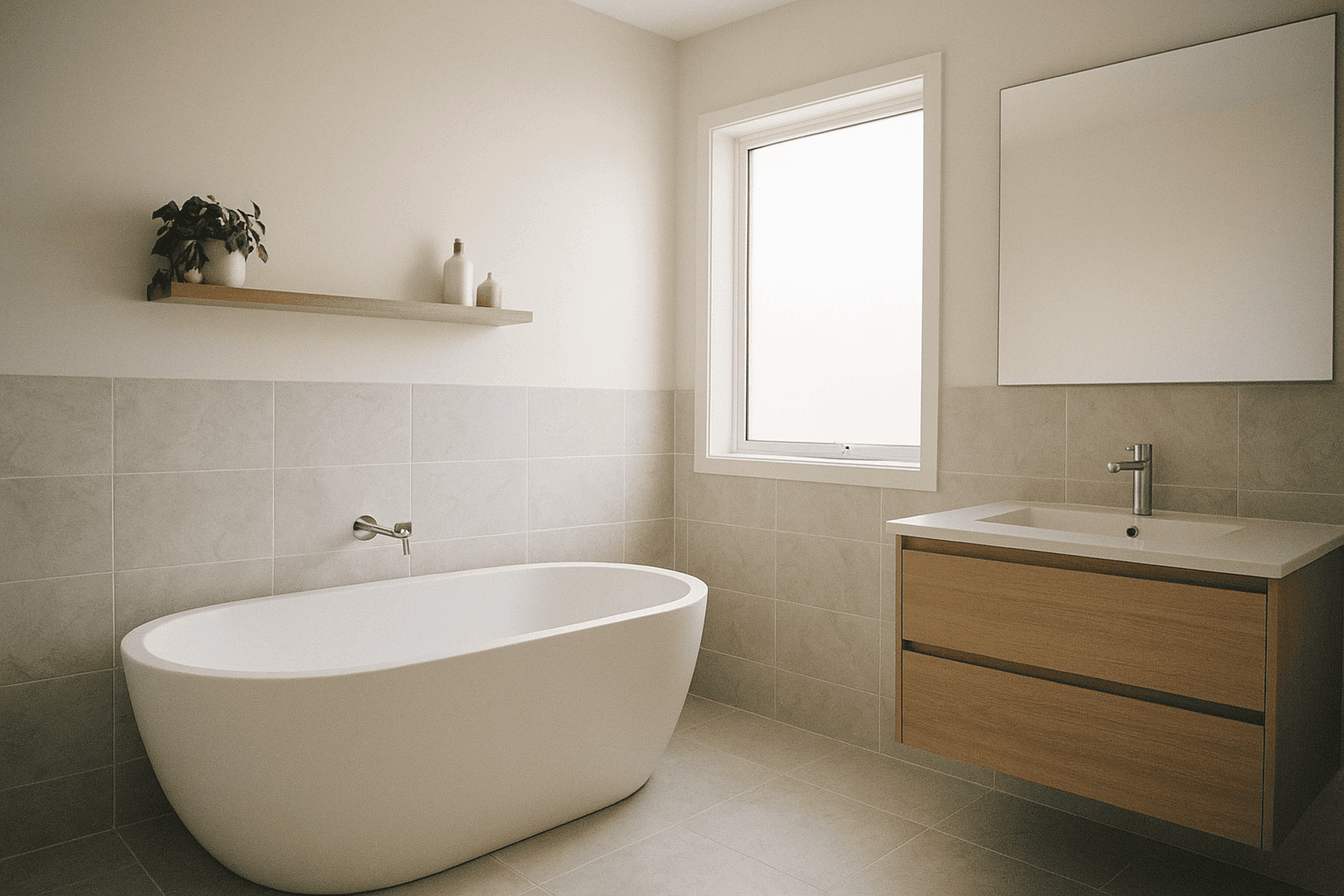
Step-by-step planning and execution
H2: Scope the job properly
Decide the ambition: cosmetic refresh (new vanity, paint), medium reno (new tiles, shower, floor), or full strip-out with layout changes.
Measure accurately: floor area, ceiling height, window/door positions, and locate the existing plumbing stacks and electrical runs.
Identify constraints: load-bearing walls, underfloor access, vents, and if the property is part of a strata or heritage overlay.
Set must-haves vs nice-to-haves: write them down. This stops scope creep.
H2: Prepare a practical brief for your bath remodeling contractor
Include: layout sketch, desired fixtures, tile inspiration (with sizes), colours, and priority list.
Ask for: a fixed-price quote with line items, estimated timeline, list of subtrades, licensing and insurance details, and payment schedule.
Permits & approvals: who obtains them — you or the contractor? Make that clear in writing.
H2: Selecting trades and getting quotes
Get at least three quotes. Cheap is tempting but check references and recent project photos.
Check licences and insurance: plumbers and electricians must be licensed in your state. Request proof of contractor insurance (public liability, workers comp).
Preferred suppliers vs trade pricing: ask if the contractor can access trade pricing on tiles/fixtures — that often saves cash.
H2: Construction timeline and who does what
Pre-start stage (1–2 weeks): finalise selections, order long-lead items (vanity, shower screens), secure permits.
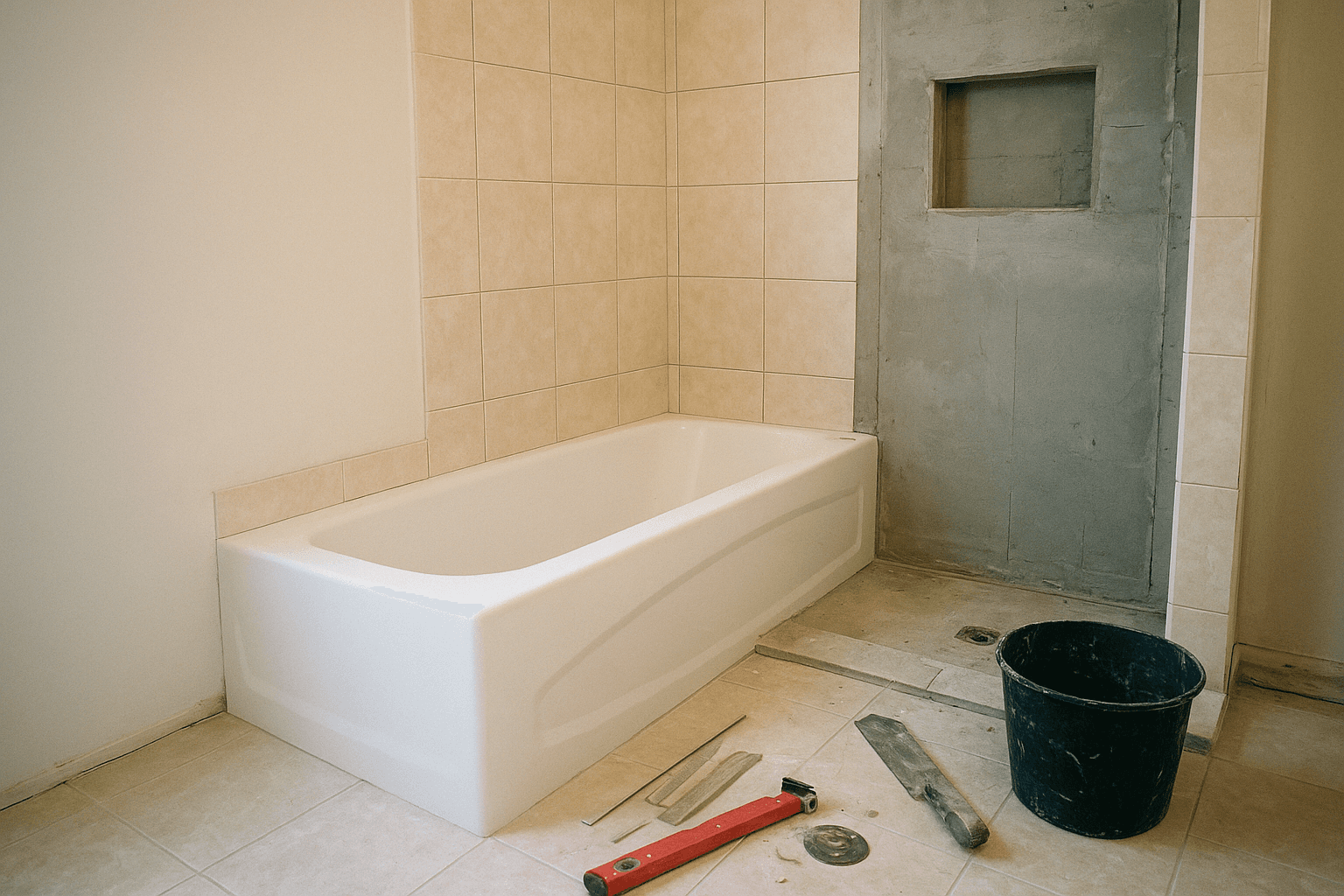
Demolition (1–3 days): strip fittings, tiles and possibly floorboards. Expect a mess — arrange dust protection.
Rough-in (2–5 days): plumbers and electricians reposition services. Important to inspect before walls are closed.
Waterproofing and screeding (2–4 days): must be inspected and allowed to cure to standards.
Tiling (3–10 days): depends on size and drying times.
Fixtures and fit-off (2–5 days): vanity, toilet, shower screen, fixtures, painting and final clean.
Practical completion: final inspection, defect list and handover.
Realistic total time for a standard family bathroom: 3–6 weeks. Full layout changes or structural work: 6–12 weeks.
H2: Estimating the Costs for the bath remodeling contractor
Below are realistic price ranges for Australia as of 2025. Costs vary with city, finishing level and whether you retain plumbing locations.
Sample price bands (indicative)
Basic / cosmetic refresh: $5,000 – $12,000
Replace vanity, toilet, repaint, regrout or selected tile replacements. Minimal plumbing work.
Mid-range bathroom renovation (most common): $12,000 – $28,000
Full strip-out, new tiles, new shower, mid-range tapware and vanity, rewiring or relocated electrical only.
High-end / luxury bathroom: $28,000 – $60,000+
High-spec tiles, bespoke joinery, heated floors, freestanding tub, structural changes, designer fittings.
Ensuite renovations: $8,000 – $25,000 depending on size and scope.
Typical material and fixture costs (range)
Tiles: $25 – $150+ per m2 (ceramic to premium porcelain). Installation labour $30 – $80 per m2 extra for complex patterns.
Waterproofing membrane & installation: $35 – $120 per m2 (membrane + labour). Compliance with AS 3740 is essential.
Vanity (incl. basin): $300 – $3,000
Toilet: $200 – $800
Shower screen: $400 – $2,000 (frameless glass on the higher end)
Mixer taps / shower mixers: $150 – $1,200
Bath (if fitted): $300 – $4,000
Lighting & exhaust fan: $100 – $600 per fitting
Glazed or aluminium windows (if replaced): $500 – $2,000+
Labour breakdown
Demolition & disposal: $500 – $3,000 depending on scope and asbestos risk.
Plumber (rough-in & fit-off): $1,200 – $5,000+ — moving drains or stacks increases cost significantly.
Electrician: $300 – $2,000 depending on rewiring and new lighting/heating.
Tiler: $40 – $120 per m2 installed (labour), complexity and patterns add cost.
Carpenter / joiner: $500 – $4,000 for custom vanities or structural work.
Painter / plasterer: $400 – $1,500
Example budget scenarios (for a 3.5m2 family bathroom)
Budget Reno (~$12,500)
Strip-out & rubbish: $1,200
Plumber: $2,200 (keep existing layout)
Tiler (walls & floor): $3,000
Waterproofing: $800
Vanity & basin: $700
Shower screen & fixtures: $1,200
Toilet: $350
Electrician & lighting: $700
Painting & finishing: $350
Contingency (10%): $1,000
Mid-range Reno (~$22,000)
Strip-out & rubbish: $1,500
Plumber (some relocations): $3,800
Tiler (premium tiles): $5,000
Waterproofing (premium system): $1,600
Vanity (semi-custom): $2,000
Shower screen (frameless): $1,400
Toilet (quality): $600
Electrician (heated towel rail included): $1,200
Painting & joinery: $900
Contingency (12%): $1,000
High-end Reno (~$45,000+)
Structural changes and re-layout: $7,000+
High-end tiles and labour: $10,000+
Custom joinery & stone benchtop: $7,000
High-spec fixtures, freestanding bath, heated floors: $6,000+
All trades & finishing: $8,000+
Contingency (15%): $6,000+
Practical pricing notes
Plumbing moves are expensive. Moving a toilet or drain can add $2,000–$6,000 if it changes the fall of drains or requires core drilling.
Tiling complexity costs more. Mosaic, diagonal layouts or large-format tiles need specialist labour and priming.
Waterproofing is non-negotiable. Don’t skimp — failed waterproofing leads to catastrophic and expensive repairs.
Lead times matter. Freestanding baths, stone benchtops and custom joinery can add 4–10 weeks to the schedule.
H2: Contracts, payments and warranties
Use a written contract. It should include scope, specs (brands/models), timeline, variations process and defect rectification period (usually 12 months).
Avoid large up-front payments. Typical payment schedule: deposit (10–20%), progress payments (30–40%), retention (10% on practical completion).
Retentions and warranties: keep a small retention until defects are fixed. Ask for warranties on waterproofing, fixtures and workmanship.
H2: Compliance and standards
Waterproofing: must comply with Australian Standards (see Standards Australia / ABSC references). Use certified membranes and trades who can provide compliance certificates.
Electrical & plumbing works: must be completed by licensed trades and where required, certified and signed off.
Asbestos check: if your home predates the late 1980s–1990s, get an asbestos inspection before demolition.
Useful references:
Australian Building Codes Board: https://www.abcb.gov.au
SafeWork Australia (asbestos info): https://www.safeworkaustralia.gov.au/asbestos
NSW Fair Trading – Renovation guides: https://www.fairtrading.nsw.gov.au
Hipages bathroom renovation cost guide: https://www.hipages.com.au/renovation/bathroom-renovation-cost
These sources give national-level guidance; your state or territory may have additional requirements.
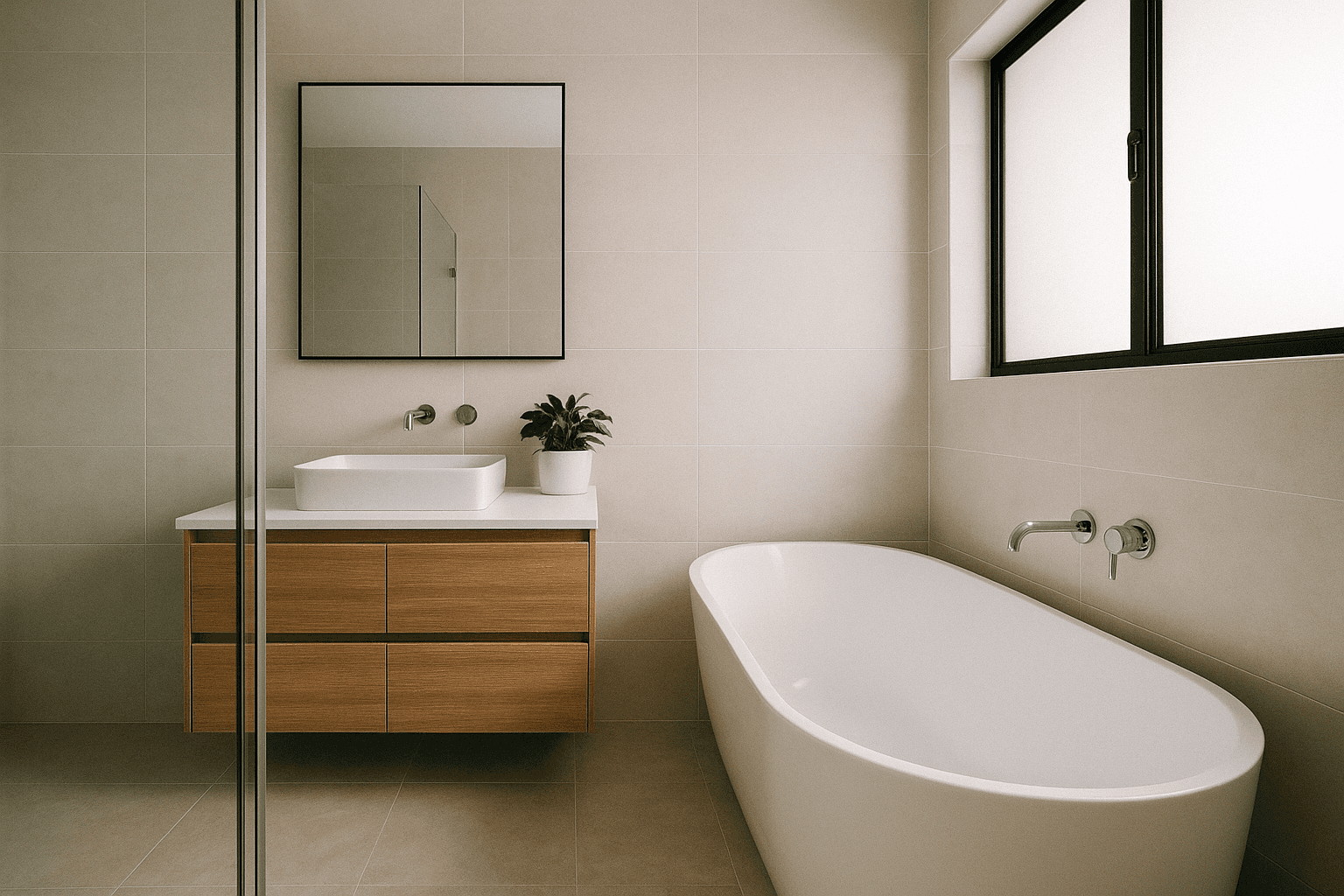
Common mistakes, traps and smart ways to save
Frequent mistakes homeowners make
Not getting multiple quotes: relying on the first quote can lead to inflated costs or missed issues.
Underestimating contingencies: 10–15% is realistic; older homes often reveal hidden problems.
Changing scope mid-job: swapping tiles or moving fittings halfway through causes delays and extra cost.
Not checking waterproofing compliance: DIY or uncertified waterproofing is risky and often voids insurances.
Ignoring ventilation: inadequate exhaust or heater leads to mould and damp problems.
How to save money without cutting corners
Keep plumbing in the same place. The single biggest saving is avoiding new drain or stack work.
Buy standard-sized tiles and fixtures. Custom sizes and imported items add cost and lead time.
Mix high/low finishes: splurge on visible hardware (tapware, shower screen) and save on vanity cabinet carcasses or basic tiles.
Shop end-of-line tiles, seconds or showroom samples. You can get high-end looks at a fraction of the price.
Do prep work yourself: clearing the area, removing old soft fixtures, or painting ceilings can save labour hours.
Things to watch during construction
Daily checks: make short notes on progress and raise concerns immediately. Keep photo records.
Ask for product codes and samples: confirm you’re getting the right tile size and shade before laying.
Inspect waterproofing before tiling: demand visual proof (photos/inspection report) of membrane application.
Confirm trade insurance: ensure subs are covered — you don’t want liability falling back on you.
Dealing with older houses and special cases
Asbestos risk: for homes built or renovated before the early 1990s, asbestos-containing materials are possible. If demolition reveals bonded or friable asbestos, stop work and engage a licensed assessor or removalist. SafeWork Australia has state contacts.
Heritage overlays / council restrictions: if your property is heritage-listed, you may need council approval for external works or changes to original fabric. Check with your local council early.
Strata properties: internal renovations in strata often require committee approval and may have rules for under-floor access, noise windows and rubbish removal.
Final handover checklist (before final payment)
Operational check: run taps, shower, check hot water, flush toilets, test heating / exhaust.
Tile & grout inspection: look for lippage, cracked tiles and grout voids.
Waterproofing warranty / certificate: obtain compliance documentation where applicable.
Receipts & warranties for appliances and fixtures: keep them with the contract.
Defects list: get agreement on outstanding items and a timetable for fixes.
Final words — realistic expectations and choosing a contractor
Renovations are part art, part trade management. A top-notch bath remodeling contractor will manage the trades, keep communication tight and provide clear pricing. Expect some dust and a few surprises, but with thorough planning, realistic budgets and the right team you’ll avoid the horror stories.
If you want a quick next step:
Prepare your brief with photos, measurements and must-haves.
Get three written quotes and compare them line-by-line.
Check licences, insurance and previous project photos.
Do it right the first time and you’ll have a bathroom that lasts — and keeps your stress levels down. If you'd like, I can give a checklist you can hand to trades or a sample brief template to bring to three contractors. No dramas — just practical help to get the job done properly.
AI-Powered Renovation Expert