Written by the Instant Reno Team
Start with the hard truth: a kitchen reno can be the biggest disruption and single-largest spend in an Australian home renovation, and if you pick the wrong kitchen remodel contractors it will blow out in time, cost and stress. From tradie no-shows to hidden asbestos in old fibro walls, Bondi renos come with specific headaches. Getting accurate planning and cost estimation right up front is non-negotiable if you want your job finished on time, on budget and with minimal dramas.
This guide covers the full job — how to choose reliable kitchen remodel contractors, the step-by-step process from demo to handover, and the nitty-gritty cost estimates you need for Sydney's eastern suburbs. Read on if you want clear, practical direction for a Bondi kitchen reno that doesn’t turn into a weekend horror story.
Why precise planning matters
Avoid scope creep: Small changes mid-job add days and thousands of dollars. Lock decisions early.
Stay legal: Bondi sits within Waverley Council and NSW planning rules — permits or complying development certificates may be required for structural changes.
Protect health and safety: Older Bondi properties can have asbestos and outdated wiring; proper removal and certification matter.
If your budget is tight, accurate estimates let you trade priorities — better joinery or a higher-end benchtop — rather than getting whacked by unforeseen costs.
Who this guide is for
Homeowners in Bondi and nearby suburbs considering a full or partial kitchen renovation.
People looking to hire local kitchen remodel contractors, tradies and suppliers.
Anyone who wants a realistic cost range and a checklist to manage trades and council rules.
Next up: a practical, step-by-step breakdown of the process, then a detailed cost section tailored for Bondi conditions.
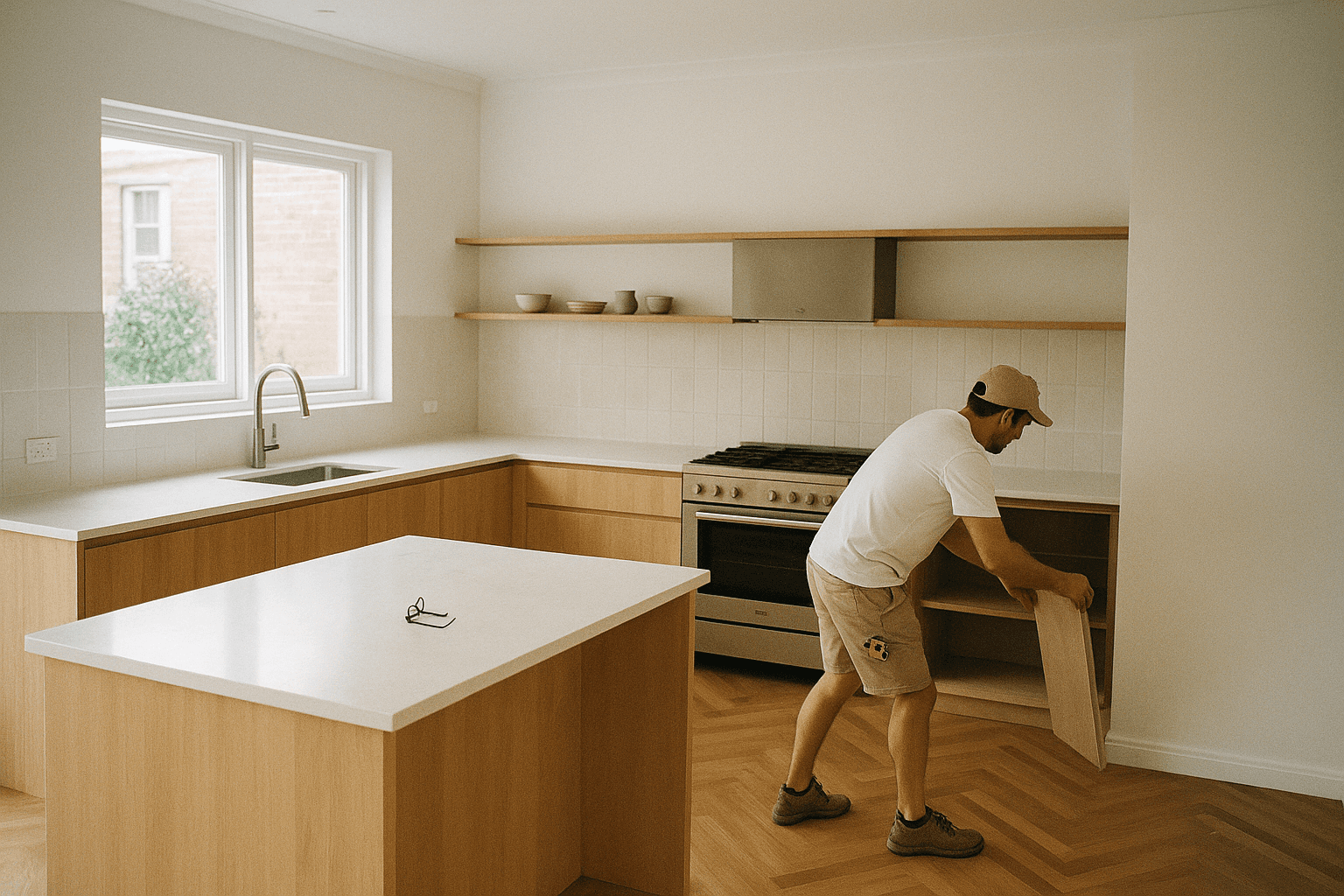
Step-by-step plan for a successful kitchen reno
Below is a logical sequence to follow. Use it as your master checklist and discuss each stage with prospective kitchen remodel contractors.
1. Define the scope and priorities
Full gut and rebuild vs refresh: A full gut (floor, cabinets, services) costs considerably more than replacing bench tops and appliances.
Must-haves vs nice-to-haves: List priorities (e.g., better storage, island bench, gas cooktop) to guide trade selections.
Timeline: Do you need the kitchen back for a family event? Time constraints affect costs.
2. Engage a designer or builder early
Kitchen designer: Useful for layout optimisation and working drawings; many contractors offer design+build.
Builder or design-build contractor: Single point of responsibility reduces finger-pointing. Make sure they are licensed.
Tip: Ask contractors to provide a detailed scope and a fixed-price quote rather than a ballpark rate.
3. Pre-start checks and approvals
Council and certifier requirements: Structural changes, plumbing relocation, and major electrical works may need a Development Application (DA) or Complying Development Certificate (CDC).
Heritage overlays and streetscapes: Some Bondi streets have heritage protections which restrict external changes.
Asbestos survey: For homes built before the 1990s, get an inspection from an accredited assessor.
Sources:
Waverley Council planning info: https://www.waverley.nsw.gov.au
NSW Planning Portal (CDC/DA guidance): https://www.planningportal.nsw.gov.au
Asbestos guidance (SafeWork NSW): https://www.safework.nsw.gov.au/hazards-a-z/asbestos
4. Tendering and contracts
Get 3 written quotes: Ask for itemised pricing (cabinetry, benchtop, appliances, plumbing, electrical, tiling, flooring, demo, disposal).
Check licences and insurance: Builders must be licensed for jobs over the statutory threshold (see Fair Trading NSW). Insurance should include public liability and home warranty for structural work.
Contract essentials: Fixed price, scope, inclusions/exclusions, timelines, progress payment schedule, defects period, variations process.
Useful link: Fair Trading NSW on using builders and contractors: https://www.fairtrading.nsw.gov.au/housing-and-property/building-and-renovating/using-a-builder-or-tradesperson
5. Pre-construction and procurement
Order long-lead items first: Custom joinery and stone benchtops take weeks; lock these down early.
Mock-ups and samples: View cabinetry finishes, tile samples and benchtop slabs in person.
Site protection: Protect floors, walls and neighbouring properties, particularly in terrace or apartment conversions in Bondi.
6. Demolition and services upgrade
Safe asbestos removal: If asbestos is present, removal must be done by licensed contractors with proper waste handling.
Plumbing and electrical rough-in: Confirm gas certification for cooktops and ovens and a licensed electrician for new circuits and LED downlights.
7. Fit-out and finish
Cabinetry installation: Quality of carcasses, hinges and drawer runners matters for longevity.
Benchtop templating and installation: Stone templating occurs after base cabinets are fixed.
Tiling, splashbacks and painting: Schedule to avoid trades clashing.
8. Handover and defects
Practical completion checklist: Appliances operational, no leaks, doors and drawers aligned, floor finishes completed.
Defects list and rectification: Contractors should provide a defect rectification period (typically 12 months for most works, longer for structural).
Estimating the Costs for the kitchen remodel contractors
This section gives realistic price ranges for Bondi/Sydney eastern suburbs in 2025 currency. Prices vary by quality level and complexity — use these as a framework.
Note on pricing tiers:
Budget: Functional, entry-level cabinetry, laminate benchtops, mid-range appliances.
Mid-range: Semi-custom cabinetry, engineered stone benchtop, higher-end appliances and finishes.
Premium: Fully custom cabinetry, natural stone, premium European appliances, joinery details.
Overall project cost (per square metre and typical job)
Small refresh (replace benchtop, splashback, appliances): $8,000 – $25,000
Partial reno (cabinet fronts, bench, new appliances, minor layout changes): $25,000 – $55,000
Full gut and rebuild (typical 8–12m2 Bondi kitchen): $55,000 – $150,000+
Example: A mid-range full gut of a 10m2 Bondi kitchen typically sits around $70,000 – $95,000.
Breakdown by major categories (typical mid-range full gut)
Design and permits / certifier: $1,500 – $7,000
Includes: drawings, CDC/DA fees, certifier inspections if needed.
Demolition and rubbish removal: $1,500 – $6,000
Includes asbestos removal if required — asbestos pockets significantly increase cost.
Carpentry and cabinetry: $18,000 – $45,000
Stock flat-pack: $6,000 – $12,000; Semi-custom: $12,000 – $28,000; Custom: $25,000+
Benchtops: $3,500 – $12,000
Laminates $500–$2,000; Engineered stone $2,500–$7,500; Marble/Granite $4,500+
Appliances: $3,000 – $12,000
Quality induction/gas cooktops, rangehood, oven, dishwasher, fridge not always included.
Plumbing: $1,500 – $6,000
Relocation of sink/gas lines increases cost; include gas certifier fees.
Electrical and lighting: $1,200 – $5,000
New circuits, LED downlights, undercabinet lighting, oven/cooktop supply.
Flooring and tiling: $2,000 – $8,000
Tile supply and install depends on size and material.
Painting and finishes: $1,000 – $4,000
Contingency: 10–20% recommended for unseen issues (rising damp, termite damage, asbestos).
Labour considerations
Rates: Trades in Sydney command higher rates than regional areas. Expect plumbers, electricians and licensed trades to be 10–25% higher than interstate averages.
Team structure: A single design-build contractor reduces coordination costs but may have higher margin; organising separate trades yourself can save money if you manage well.
Time on site: Typical full gut 4–10 weeks depending on scope; longer if structural changes or DA required.
Cost-saving levers (without cutting corners)
Keep layout similar to avoid plumbing and structural movement (saves $3k–$12k).
Choose semi-custom cabinetry rather than fully custom.
Buy appliances during sales or clearance; source one or two premium items and balance with mid-range for others.
Reuse or refinish existing flooring where possible to avoid replacement costs.
Bondi-specific cost factors
Access and parking: Narrow streets and parking restrictions can add labour time for deliveries and scaffold hire.
High demand for tradies: Labour premium in eastern suburbs — book early and expect deposits.
Heritage limitations: If your property is heritage-listed, extra costs for approved materials and finishes apply.
Waste disposal: Safe asbestos removal and disposal is strictly regulated — extra fees apply for licensed disposal.
Local sources and regulatory links:
Waverley Council general info: https://www.waverley.nsw.gov.au
Asbestos disposal and council guidance: https://www.waverley.nsw.gov.au/services/rubbish_and_recycling/asbestos_disposal
SafeWork asbestos advice: https://www.safework.nsw.gov.au/hazards-a-z/asbestos
NSW Planning Portal for DA/CDC: https://www.planningportal.nsw.gov.au
Fair Trading NSW builder licensing: https://www.fairtrading.nsw.gov.au/housing-and-property/building-and-renovating/using-a-builder-or-tradesperson
Example realistic budget scenarios (Bondi, 10m2 kitchen)
Tight budget reno (no structural change): $28,000 – $40,000
Smart mid-range full reno: $65,000 – $95,000
High-end custom reno: $110,000 – $180,000+
If you need an accurate number for your exact layout, request two detailed fixed-price quotes that list every inclusion and a provisional sum for unknowns (like patching old walls or corroded plumbing).
Common mistakes Bondi homeowners make — and how to avoid them
Mistake 1: Choosing the cheapest quote
Cheap often equals vague scope. A low quote can hide allowances for cheaper materials or exclude critical items like waterproofing or edging.
Fix: Require an itemised quote with brands, model numbers, warranty details and a clear inclusions/exclusions list.
Mistake 2: Not accounting for access and logistics
Bondi terraces and apartments often have limited access. Trades running out to get materials add hours to labour costs.
Fix: Speak with contractors about access plans, delivery windows and scaffold requirements. Factor in extra time and loading/unloading fees.
Mistake 3: No contingency for hidden issues
Older Bondi homes commonly reveal asbestos, rotten joists or corroded pipes when walls or floors are opened.
Fix: Budget 10–20% contingency and commission an asbestos inspection before signing a contract (see SafeWork NSW).
Mistake 4: Over-customising without need
Moving services or structural changes can double or triple costs.
Fix: Keep the plumbing run and window/door positions where possible; invest in cabinetry and benchtop quality instead.
Mistake 5: Poor communication and no contract
Verbal agreements lead to disputes over variations and timelines.
Fix: Use a clear written contract with a progress payment schedule linked to milestones, not dates alone.
How to save money without cutting corners
Prioritise: Spend on what you will use daily — good bench height, drawers instead of cupboards, quality sink and tap.
Standard sizes: Choose standard cabinet widths and benchtop depths to avoid custom extras.
Buy some items yourself: Lighting, tapware and appliances can sometimes be cheaper if bought during sales — just ensure the builder will accept client-supplied items.
Phase the reno: If budget is tight, consider staged works: first do cabinetry and services, later upgrade benchtop or tiles.
What to look for when hiring kitchen remodel contractors
Licence and insurance: Confirm builder licence and ask for home warranty insurance for jobs over the statutory threshold.
Portfolio and references: Look for recent Bondi projects; ask for at least two local referees to call.
Clear communication: A reliable contractor will provide a program, be prompt on site, and have a waste management plan.
Warranty and aftercare: Get workmanship warranties in writing and know the defects rectification process.
Local voices — what Bondi folks are saying
On local forums and community threads, people repeatedly emphasise the importance of picking a builder with Bondi experience because of logistics and heritage sensitivities. Comments often mention positive experiences where local tradies finished on time and cleaned up well, and negative stories where homeowners were surprised by added costs for asbestos removal or parking fines.
Final checklist before you sign
Have you obtained or confirmed required approvals and certifier requirements?
Is the quote fixed-price and itemised with allowances and provisional sums explained?
Has an asbestos check been performed if your home was built before the 1990s?
Are progress payments aligned with completed milestones, not calendar dates alone?
Is rubbish and waste, including asbestos, disposal clearly handled by the contractor?
Closing advice — realistic, no-nonsense
A Bondi kitchen reno is absolutely achievable without losing your mind — but it takes planning, the right team and sensible budgets. Treat your contractor as a partner: communicate clearly, lock key decisions early and keep contingency funds for the inevitable surprises.
If you want a straight estimate tailored to your kitchen, gather these details before you call contractors: kitchen size (m2), current layout, photos, a list of must-haves, and whether you suspect asbestos or structural work. Then get at least two fixed-price quotes and check licences and local experience.
Good luck — get your drawings sorted, pick trades with Bondi experience, and don’t be shy to walk away if a quote feels too vague. The right pile of paperwork and a trusted tradie will make this a rewarding reno, not a saga.
AI-Powered Renovation Expert